Important Notice

By continuing, you agree to our privacy policy, consent to cookies, and confirm you are 21 or older.

I have read and agree to the Privacy Policy and Terms of Service.

YOU MUST BE 21 OR OLDER TO CONTINUE

NYC, Long Island and The Hamptons Receive Free Delivery on Orders $300+

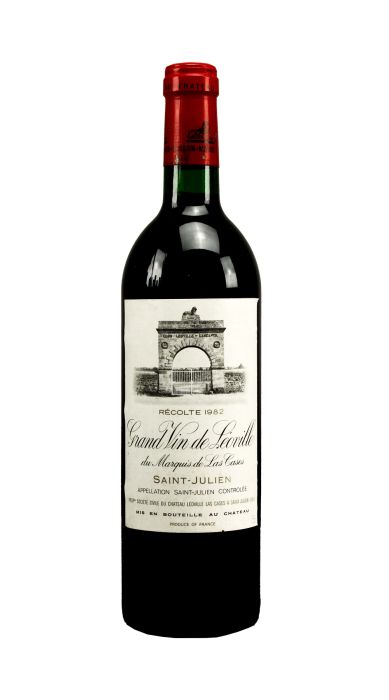
1982 Leoville Las Cases

100 RP-HG

Availability:

Critic Reviews

Still stubbornly backward, yet beginning to budge from its pre-adolescent stage, this dense, murky ruby/purple-colored wine offers up notes of graphite, sweet caramel, black cherry jam, cassis, and minerals. The nose takes some coaxing, and the decanting of 2-4 hours prior to service is highly recommended. For such a low acid wine, it is huge, well-delineated, extremely concentrated, and surprisingly fresh. Perhaps because I lean more toward the hedonistic view of wine than the late Michel Delon, I have always preferred this to the 1986, but the truth is that any lover of classic Medoc should have both vintages in their cellar. This wine has monstrous levels of glycerin, extract, and density, but still seems very youthful, and tastes more like a 7 to 8-year-old Bordeaux than one that is past its twentieth birthday. A monumental effort. Anticipated maturity: 2005-2035. Last tasted, 9/02.

Robert Parker | 100 RP
Tasted at the domaine, the 1982 Leoville Las Cases is just about pure perfection, and while certainly mature, it has plenty of life ahead of it. Thrilling notes of blackcurrants, kirsch, tobacco leaf, cedar box, menthol, and exotic spices all emerge from this seamless, powerful yet magically elegant Leoville Las Cases. Opening up in the glass, with a smoky, singular character, it’s an incredible wine from this terroir that has an almost Latour-like regal quality. It should continue drinking well for another 10-15 years and I’m sure will keep even longer.

Jeb Dunnuck | 99 JD
It’s impossible, I know, to believe that a St-Julien might not be perfectly ready to drink at this ripe old age, but here we are, face to face with the conundrum that is Léoville Las Cases. You’ll be happy to hear I had the 1981 Léoville recently and it was actually open, soft and ready to go. This 1982 is still a little stubborn on first opening, but gets better and better in the glass, with sweet brambly ripe fruits, and rippling tannins that are almost honeyed at this stage. Classic, dense, mineral minty touches on the finish, great persistency and a way still ahead of it. Michel Delon, father of today’s owner, was in charge at this point (and until 2000) and the cellar master Bruno Rolland remembers that they were working in shorts at night in the vat house because even after harvest the temperature was not dropping below 20 degrees at night. They were the first estate in St Julien to start harvesting in 1982 by the way, on September 13. Petit Verdot 5% finishes the blend. Drinking Window 2018 - 2045.

Decanter | 97 DEC
A racy, classy, silky wine. Inky-ruby color. Black cherry, mineral and wet earth aromas. Medium-bodied, with very silky tannins and a long, superfine finish. Has always been excellent.--1982 Bordeaux horizontal. Best after 2000.

Wine Spectator | 95 WS
(Château Leoville Las Cases) The 1982 Leoville Las Cases is a very nice and youthful wine, but I have always been under the impression that this wine was made in the cellar, rather than the vineyard, and will never really attain the level of greatness that is attributed to it elsewhere. The wine is certainly deep and concentrated in personality, offering up a still quite primary bouquet of cassis, black cherries, cigar ash, a touch of mint and plenty of toasty new oak. On the palate the wine is deep, full-bodied, quite extracted in profile and still fairly tannic, with a good core, fine focus and grip and very good, but not great length on the youthful finish. Maybe this will eventually become the complex wine of its considerable reputation, but I am skeptical, and rather expect the ’82 Las Cases to always trade on its power, but never develop the complexity of the truly great wines of this vintage. Call it good, not great. (Drink between 2023-2075).

John Gilman | 93 JG
Sadly, it is not a great night for Bordeaux. The 1982 Léoville Las Cases is powerful but also incredibly compact, with little appeal or mid-palate depth. This is a very stubborn wine, even within the context of Las Cases.

Antonio Galloni | 92 AG

Wine Details for 1982 Leoville Las Cases

Type of Wine Bordeaux Red : Picture in your mind a combination of cedar, lead pencil, blackcurrant, plum and mineral aromatics, and texture that caresses your palate like a playful lover. The experience is thrilling from the first whiff to the final seconds of a tannic, generous finish - that is what you'll get from a Bordeaux Red
Varietal Proprietary Blend : Proprietary Blend is a general term used to indicate that a wine is comprised of multiple grape varietals which are either “proprietary” to the winery or is blended and does not meet the required maximum or minimum percentage of a particular varietal. This also is the case for the grape’s place of origin, especially for region, appellation or vineyard designated wines. There are endless examples of blended wines which are labeled as “Proprietary Blend” and in conjunction with each region’s stipulated wine laws and regulations makes for a vast blanket for wines to fall into. Perhaps the simplest example is California; if a wine is to be labeled as Napa Valley Cabernet Sauvignon, it is required to have at least 75% of the varietal (Cabernet Sauvignon) and 85% of the fruit must be cultivated from the Napa Valley wine district. If the wine does not meet the requirements, it is then labeled as Proprietary Blend.

Country France : Wine is the lifeblood that courses through the country of France, pulsing with vigorous pride and determination. Viticulture is not just a hobby or an occupation in France; it is a passion, a cherished tradition that has been passed down through generations of wine stained hands. Winemaking is a beloved art that has been ingrained in the culture, an aptitude instilled in sons by fathers and the hallmark for which France’s reputation was built, allowing it to be renowned as, arguably, the most important wine producing country in the world.


For centuries, France has been producing wines of superior quality and in much greater quantity than any other country in the world. It boasts some of the most impressive wine regions, coveted vineyards and prestigious wines on earth. The regions of Bordeaux, Burgundy, Rhone, Sauternes and Champagne have become the benchmark, for which others aspire to become. Legendary producers such as Chateaux Margaux, Domaine De La Romanee Conti, Chapoutier, d’Yquem and Dom Perignon are idolized world-wide.


France has stamped its name on nearly every style of wine, from the nectar-like sweet Sauternes to hedonistic Chateauneuf Du Papes classic Bordeaux and Burgundy, to its sparkling dominance in Champagne. Many of the most infamous grape varietals in the world, such as Cabernet Sauvignon, Merlot, Pinot Noir and Chardonnay originated in France and are not only beloved, but utilized in the creation of some of the greatest wines on earth. French wine production commands the attention of the wine market year after year. With over 860,000 hectares under vine, and numbers close to 50 million hectoliters of wine produced annually, France dominates the market and sets the standard for not only product quality, but also quantity.


France’s many contributions to the world of wine have been absolutely indispensable. The country is the originator of the term “Premier Cru,” coined the term Terroir (a French term so complex there is no literal translation) and has laid the blueprint for a structured appellation system, which others have implemented in their own countries. French vineyard techniques and winemaking practices are mimicked world-wide. California vintners have been replicating Rhone style wines for decades, South America has adopted the French varietal of Malbec and countries around the world are imitating Burgundian styled Chardonnay and Pinot Noir.


With vast diversity in terroir, France is home to some of the most hospitable winegrowing locations on earth. The combination of topography, geology, climate, rainfall and even the amount of sunlight combined with the long historical tradition of winegrowing and making, has allowed the vintners of France to not only hone their skills, but learn from nature to create a product that like the world in which it resides… is very much alive.


Region Bordeaux : Even among the greatest and most reputable wine regions on the planet, Bordeaux stands above the rest. The winemakers of this region have a single-minded dedication to the fine art of viticulture and their efforts never fail to show. If you consider yourself a fine wine enthusiast, you owe it to yourself to visit Bordeaux - life changing. Whether you wish to drink some inspirational and gripping wine as soon as possible, or you want to add some masterpieces to your collection, no region on Earth is a more obvious choice.

The noble and beautiful Garonne and Dordogne rivers surge through southwestern France, enriching the soil in a way very few other places can boast. The limestone-based earth is rich in calcium, and the almost oceanic climate conditions give the staple Bordeaux grape varietals vigor and flavor like nowhere else. For their illustrious reds, Bordeaux winemakers rely on a proven combination of Cabernet Sauvignon, Malbec, Merlot, Cabernet Franc and Petit Verdot. Meanwhile, a sip of their excellent white wine hints at the use of Semillon, Muscadelle and Sauvignon Blanc.Each of these varietals carries a unique identity, making every quality wine a character piece to rival Citizen Kane. It can be incredibly hard to choose only a few wines to collect for your cellar!
Subregion Left Bank
Appellation Saint Julien

Overview

Producer Chateau Leoville Las Cases : The infamous estate of Leoville Las Cases has a long and interesting history that intertwines with two other Saint Julien properties on the Left Bank of the Medoc. This once massive Leoville estate, owned by Alexander de Gascq was broken apart upon his death in 1840. What transpired next would change the landscape of Saint Julien and the Medoc forever…

Before the property was separated, a portion was culled from the original vineyard and sold to Thomas Barton, which was the inception of Leoville Barton. The remaining portion of the estate was divided between de Gascq’s eldest son, Pierre Jean de Las Cases and daughter Jeane. Jeane would pass her inheritance on to her daughter and wife of Baron Jean-Marie Poyferre de Ceres, and Leoville Poyferre was birthed. The final portion of the estate was named for its inheritor, Jean Pierre de Las Cases.

While the three estates have a shared history of their respective inductions and while Las Cases and Poyferre may still share a building and parking lot, they are very much different and individually unique in terms of wine. Las Cases is farthest north bordering Pauillac and the renowned property of Chateau Latour. In fact, only a small stream, “The Juillac” separates the two vineyards.

The 98 hectares of Leoville Las Cases are planted to 67% Cabernet Sauvignon, 23% Merlot, and 10% Cabernet Franc. There are remaining Petit Verdot vines on the property; however, in recent years that number has dwindled allowing the planting of Merlot to increase.

The heart of the vineyard is known as the Grand Clos. The walled in parcel is situation in the northern most part of Saint Julien, where it neighbors Latour. The Grand Clos parcel is 50 hectares of terrain which consists of two small hills of deep gravel soils placed on top of clay and sand with a south eastern exposure. This parcel is designated for the planting of the estates Cabernet Sauvignon, while Merlot grows near the bottom of the slopes. Given its more northern location it enjoys a unique micro-climate and at its highest elevation reaches 15 meters. The remaining parcels have terroir with a soil structure of mostly gravel with gravelly sand and gravelly clay.

Today the Delon family owns the historic Las Cases estate and is committed to continuing its legacy and increasing the quality of wine. A second wine named Petit Lion du Marquis de Las Cases was introduced in 2007. While Clos du Marquis is often considered the second wine of Leoville Las Cases, it is very much its own wine. The fruit is sourced from the same vineyards each year and though it is produced by the same team as Las Cases, the chateau prefers to think of Clos du Marquis as its own, unique, Saint Julien wine. Annual production between all three wines is around 25,000 to 30,000 cases.

Las Cases was designated a Second Growth in the Official Classification of the Medoc in 1855 and has since been a leading, Saint Julien producer. It has raised in popularity and is highly coveted by wine enthusiasts and collectors alike.

People also bought:

Need Help Finding the right wine?

Your personal wine consultant will assist you with buying, managing your collection, investing in wine, entertaining and more.

loader
Loading...