Important Notice

By continuing, you agree to our privacy policy, consent to cookies, and confirm you are 21 or older.

I have read and agree to the Privacy Policy and Terms of Service.

YOU MUST BE 21 OR OLDER TO CONTINUE

NYC, Long Island and The Hamptons Receive Free Delivery on Orders $300+
Cool Wine Shippers Now Available.

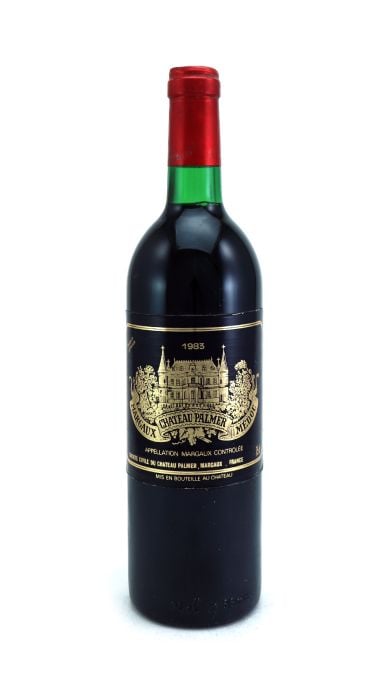
1983 Palmer

98 RP

Availability:
Featured Review
This wine goes from strength to strength, and is certainly a candidate for “wine of the vintage.” It has surpassed even Chateau Margaux in recent tastings. The color is an opaque plum/purple. The wine has a fabulously complex nose of smoked duck, white flowers, cedar, Asian spice, creme de cassis, melted licorice, and espresso. Super-concentrated, very powerful, full-bodied, and huge, this is undeniably, one of the biggest, most concentrated, and powerful Palmers made in the last 40 years. The wines has thrown off the rugged tannins that were so prominent during its first 10-15 years of life and has become increasingly seamless and compelling. Potentially this wine remains the most extraordinary Palmer after the 1961. Anticipated maturity: Now-2020. Last tasted, 10/02. Robert Parker

Robert Parker | 98 RP

Critic Reviews

Smoky, floral and fabulous. Violet-edged, this stands out over the 1982 for its complexity of aromatics and flavours. Brambled blackberry notes meld with soft leather and liquorice, all perfectly finessed. Harvest 28 September until 13 October, around one week later than the 1982. A touch of Petit Verdot finishes up the blend. Peter Sichel, who was making the wine at the time, was convinced straight after harvest that the 1982 was better than the 1983. ’He was right,’ says Thomas Duroux today. Certainly sugar levels were a touch higher than the previous year, and the fruit character generous from the earliest years. Drinking Window 2018 - 2045.

Decanter | 100 DEC
This wine goes from strength to strength, and is certainly a candidate for “wine of the vintage.” It has surpassed even Chateau Margaux in recent tastings. The color is an opaque plum/purple. The wine has a fabulously complex nose of smoked duck, white flowers, cedar, Asian spice, creme de cassis, melted licorice, and espresso. Super-concentrated, very powerful, full-bodied, and huge, this is undeniably, one of the biggest, most concentrated, and powerful Palmers made in the last 40 years. The wines has thrown off the rugged tannins that were so prominent during its first 10-15 years of life and has become increasingly seamless and compelling. Potentially this wine remains the most extraordinary Palmer after the 1961. Anticipated maturity: Now-2020. Last tasted, 10/02.

Robert Parker | 98 RP
This is one of the all-time greatest Palmers for its complexity and finesse. Intense aromas of smoked meats and dark fruits plus hints of tobacco meet a silky, almost buttery texture of great yet beautiful concentration that combines in superb balance with a plateful of fruit and still mouthwatering acidity. The tannins are round and fat, and the finish is long and mesmerizing. This is crying out to be drunk now, yet the persistent acidity should provide for at least another 10 years of possible cellaring.

James Suckling | 98 JS
The 1983 Palmer is also fully mature yet has plenty of fruit, length, and a seamless, elegant personality that’s truly magical. Black currants, forest floor, spice-box and tobacco notes all emerge from this silky, refined beauty that still has terrific mid-palate density and awesome length. It’s not going to get any better but should easily keep for another 7-8 years.

Jeb Dunnuck | 96 JD
(Château Palmer (Margaux) served from magnum) This particular magnum was served with dinner after a full afternoon spent tasting through Klaus-Peter Keller’s brilliant range of 2018ers, so it was just icing on the cake! This is another legendary vintage at Palmer and it always lives up to its exalted reputation, with this magnum absolutely singing on both the nose and palate. The bouquet soars from the glass in a refined blend of mulberries, black cherries, cigar wrapper, summer truffles, a beautiful base of gravelly soil tones, violets and a touch of cedar. On the palate the wine is pure, full-bodied, complex and sappy at the core, with seamless balance, perfect focus and grip and a very, very long, vibrant and utterly suave finish. This is starting to really show the classic Palmer velvety texture on the palate, but out of magnum, this is synthesized to a beautifully refined structural chassis that gives the wine outstanding backend lift. Great juice. (Drink between 2019-2075).

John Gilman | 96 JG
An outstanding Palmer, firm and solid, with great dark color and fresh plum aromas and flavors with a hint of new wood. Drinkable now, but better after 1996.--The Bordeaux 50.

Wine Spectator | 90 WS
Wine Details for 1983 Palmer

Type of Wine Bordeaux Red : Picture in your mind a combination of cedar, lead pencil, blackcurrant, plum and mineral aromatics, and texture that caresses your palate like a playful lover. The experience is thrilling from the first whiff to the final seconds of a tannic, generous finish - that is what you'll get from a Bordeaux Red
Varietal Proprietary Blend : Proprietary Blend is a general term used to indicate that a wine is comprised of multiple grape varietals which are either “proprietary” to the winery or is blended and does not meet the required maximum or minimum percentage of a particular varietal. This also is the case for the grape’s place of origin, especially for region, appellation or vineyard designated wines. There are endless examples of blended wines which are labeled as “Proprietary Blend” and in conjunction with each region’s stipulated wine laws and regulations makes for a vast blanket for wines to fall into. Perhaps the simplest example is California; if a wine is to be labeled as Napa Valley Cabernet Sauvignon, it is required to have at least 75% of the varietal (Cabernet Sauvignon) and 85% of the fruit must be cultivated from the Napa Valley wine district. If the wine does not meet the requirements, it is then labeled as Proprietary Blend.

Country France : Wine is the lifeblood that courses through the country of France, pulsing with vigorous pride and determination. Viticulture is not just a hobby or an occupation in France; it is a passion, a cherished tradition that has been passed down through generations of wine stained hands. Winemaking is a beloved art that has been ingrained in the culture, an aptitude instilled in sons by fathers and the hallmark for which France’s reputation was built, allowing it to be renowned as, arguably, the most important wine producing country in the world.


For centuries, France has been producing wines of superior quality and in much greater quantity than any other country in the world. It boasts some of the most impressive wine regions, coveted vineyards and prestigious wines on earth. The regions of Bordeaux, Burgundy, Rhone, Sauternes and Champagne have become the benchmark, for which others aspire to become. Legendary producers such as Chateaux Margaux, Domaine De La Romanee Conti, Chapoutier, d’Yquem and Dom Perignon are idolized world-wide.


France has stamped its name on nearly every style of wine, from the nectar-like sweet Sauternes to hedonistic Chateauneuf Du Papes classic Bordeaux and Burgundy, to its sparkling dominance in Champagne. Many of the most infamous grape varietals in the world, such as Cabernet Sauvignon, Merlot, Pinot Noir and Chardonnay originated in France and are not only beloved, but utilized in the creation of some of the greatest wines on earth. French wine production commands the attention of the wine market year after year. With over 860,000 hectares under vine, and numbers close to 50 million hectoliters of wine produced annually, France dominates the market and sets the standard for not only product quality, but also quantity.


France’s many contributions to the world of wine have been absolutely indispensable. The country is the originator of the term “Premier Cru,” coined the term Terroir (a French term so complex there is no literal translation) and has laid the blueprint for a structured appellation system, which others have implemented in their own countries. French vineyard techniques and winemaking practices are mimicked world-wide. California vintners have been replicating Rhone style wines for decades, South America has adopted the French varietal of Malbec and countries around the world are imitating Burgundian styled Chardonnay and Pinot Noir.


With vast diversity in terroir, France is home to some of the most hospitable winegrowing locations on earth. The combination of topography, geology, climate, rainfall and even the amount of sunlight combined with the long historical tradition of winegrowing and making, has allowed the vintners of France to not only hone their skills, but learn from nature to create a product that like the world in which it resides… is very much alive.


Region Bordeaux : Even among the greatest and most reputable wine regions on the planet, Bordeaux stands above the rest. The winemakers of this region have a single-minded dedication to the fine art of viticulture and their efforts never fail to show. If you consider yourself a fine wine enthusiast, you owe it to yourself to visit Bordeaux - life changing. Whether you wish to drink some inspirational and gripping wine as soon as possible, or you want to add some masterpieces to your collection, no region on Earth is a more obvious choice.

The noble and beautiful Garonne and Dordogne rivers surge through southwestern France, enriching the soil in a way very few other places can boast. The limestone-based earth is rich in calcium, and the almost oceanic climate conditions give the staple Bordeaux grape varietals vigor and flavor like nowhere else. For their illustrious reds, Bordeaux winemakers rely on a proven combination of Cabernet Sauvignon, Malbec, Merlot, Cabernet Franc and Petit Verdot. Meanwhile, a sip of their excellent white wine hints at the use of Semillon, Muscadelle and Sauvignon Blanc.Each of these varietals carries a unique identity, making every quality wine a character piece to rival Citizen Kane. It can be incredibly hard to choose only a few wines to collect for your cellar!
Subregion Left Bank
Appellation Margaux
Cru Third Growth

Overview

Producer Chateau Palmer

People also bought:

Need Help Finding the right wine?

Your personal wine consultant will assist you with buying, managing your collection, investing in wine, entertaining and more.

loader
Loading...