Important Notice

By continuing, you agree to our privacy policy, consent to cookies, and confirm you are 21 or older.

I have read and agree to the Privacy Policy and Terms of Service.

YOU MUST BE 21 OR OLDER TO CONTINUE

NYC, Long Island and The Hamptons Receive Free Delivery on Orders $300+

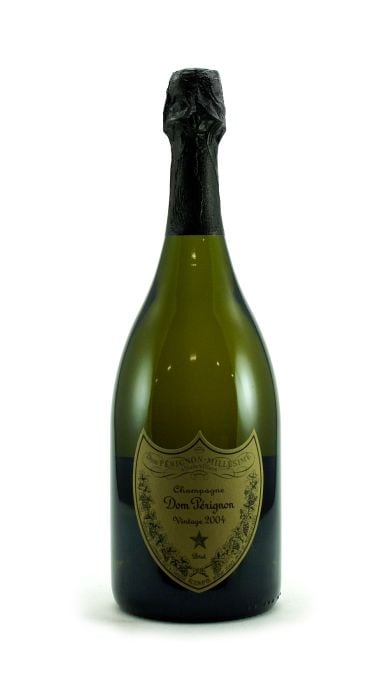
2004 Dom Perignon

97+ VM

Availability:

Critic Reviews

Another stellar wine, the 2004 Dom Pérignon is just starting to show the first signs of aromatic development, as well as a bit of added weight it did not have as a young wine. The 2004 remains a bright, mid-weight DP built on persistence and length more than overt volume. I have always had a soft spot for the 2004. This tasting does nothing to dampen that enthusiasm.

Vinous Media | 97 VM
A return to regular form after the wild 2003 edition, this is business as usual in terms of the composed and complex swagger that is a hallmark of Dom. Good deep autolysis here, toasty yeasty characters wrap around a wealth of grapefruit and pithy lemon citrus notes; the chardonnay rings clear as a bell at around half of the blend. The palate has assertive, driving power and fully formed deep-seated phenolic presence with a chord of acidity steering it through a long, fresh and gently nutty finish. Classic Dom is back! Best drunk around 2019.

James Suckling | 96 JS
(Dom Pérignon Brut (Moët et Chandon)) The 2004 Dom Pérignon is another great classic in the making, and this is one of those vintages that will truly deserve all of thirty years’ worth of bottle age, so that it can fully blossom and deliver fully its formidable potential. The beautiful bouquet delivers a refined still youthful constellation of green apple, menthol, salty minerality, white flowers, a touch of iodine and already, the first hints of the crème patissière to come with more bottle age. On the palate the wine is pure, full and very racy in personality, with a lovely core, excellent complexity, refined mousse and superb focus and grip on the very long and energetic finish. This is still a puppy and needs several more years in the cellar to start to blossom, but it will be stunning once it reaches its plateau of peak maturity. Expect it to first start to properly open at age twenty and really hit its stride at age thirty and beyond. (Drink between 2024-2075).

John Gilman | 96+ JG
With all the lush plenitude of the 2004 vintage, this wine’s explosive flavors give it a bold, broad, layered impression on the palate. But the tight structure and edgy tension of the acidity reins it in, capturing the wine’s aromatic power and extending it into graceful length. This is a precise and sophisticated Champagne suited to the cellar.

Wine & Spirits | 96 W&S
A graceful Champagne, with minerally drive. Firm acidity and a rich vein of smoky mineral meshes with the plush texture, offering finely woven flavors of mirabelle jam, toasted brioche, crunchy pear, honey and smoked almond. Delivers a long, mouthwatering finish. Drink now through 2029.

Wine Spectator | 95 WS
The 2004 Dom Pérignon is one of the more reductive, autolytic vintages of this wine to have been released in the last decade, offering up a toasty bouquet of pears, green apple, iodine, peach and smoke. On the palate, it’s medium to full-bodied, satiny textured and fleshy, with a sweet core of fruit, a fine mousse and a vinous profile. The 2004 is drinking well today: as I wrote earlier this year, between the rich, ripe 2002 and the powerful but racy 2008, the 2004 is an excellent but more classically proportioned example of Dom Pérignon.

Robert Parker Wine Advocate | 94 RP
In 2004, quality and quantity were happy bedfellows, especially in the vineyards of the Côte des Blancs. Geoffroy said that by now he had the confidence and experience to stand back a little and allow nature to do its worst, or in this instance, its best. He describes ’04’s appeal in terms of a ‘substantial embrace’ and there’s certainly a generous, almost sensual character to this wine. It’s finely manicured with a glorious nose, the faintest touch of reduction and woodsmoke held in perfect counterpoint by a nascent fruit character. Dramatic tension cedes to radiance and harmony. Served from jeroboam. Drinking Window 2019 - 2035.

Decanter | 93 DEC
(Moët & Chandon Brut - Dom Perignon (magnum) Champagne/Sparkling) In the same fashion as the 2006, here too there is noticeable reduction though in contrast to its younger brother, the reductive notes completely dominate. Otherwise there is very good intensity to the particularly well-delineated middle weight flavors that are supported by an admirably fine mousse while delivering good if not sensational length on the youthfully austere, linear, compact and notably dry finish. I appreciate that this is exceptionally primary and this sense of youthful backwardness is of course enhanced by the magnum format. That said, this seems to lack nuance and the nose is so reduced that it’s not easy to imagine how that level of funk eventually dissipates. In short, while this may eventually come together I found the ’04 Dom to be somewhat disappointing. (Drink starting 2024).

Burghound | 90 BH
Wine Details for 2004 Dom Perignon

Type of Wine Champagne : Nothing like a refreshing, vivacious glass of fine Champagne during a hot summer afternoon. Typically combining Chardonnay, Pinot Noir, and Pinot Meunier, each Champagne house has a distinct style. Whether you want to sample a single varietal (such as the 100% Chardonnay blanc de blancs) or a tasteful blend, no region can compete with Champagne.
Varietal Proprietary Blend : Proprietary Blend is a general term used to indicate that a wine is comprised of multiple grape varietals which are either “proprietary” to the winery or is blended and does not meet the required maximum or minimum percentage of a particular varietal. This also is the case for the grape’s place of origin, especially for region, appellation or vineyard designated wines. There are endless examples of blended wines which are labeled as “Proprietary Blend” and in conjunction with each region’s stipulated wine laws and regulations makes for a vast blanket for wines to fall into. Perhaps the simplest example is California; if a wine is to be labeled as Napa Valley Cabernet Sauvignon, it is required to have at least 75% of the varietal (Cabernet Sauvignon) and 85% of the fruit must be cultivated from the Napa Valley wine district. If the wine does not meet the requirements, it is then labeled as Proprietary Blend.

Country France : Wine is the lifeblood that courses through the country of France, pulsing with vigorous pride and determination. Viticulture is not just a hobby or an occupation in France; it is a passion, a cherished tradition that has been passed down through generations of wine stained hands. Winemaking is a beloved art that has been ingrained in the culture, an aptitude instilled in sons by fathers and the hallmark for which France’s reputation was built, allowing it to be renowned as, arguably, the most important wine producing country in the world.


For centuries, France has been producing wines of superior quality and in much greater quantity than any other country in the world. It boasts some of the most impressive wine regions, coveted vineyards and prestigious wines on earth. The regions of Bordeaux, Burgundy, Rhone, Sauternes and Champagne have become the benchmark, for which others aspire to become. Legendary producers such as Chateaux Margaux, Domaine De La Romanee Conti, Chapoutier, d’Yquem and Dom Perignon are idolized world-wide.


France has stamped its name on nearly every style of wine, from the nectar-like sweet Sauternes to hedonistic Chateauneuf Du Papes classic Bordeaux and Burgundy, to its sparkling dominance in Champagne. Many of the most infamous grape varietals in the world, such as Cabernet Sauvignon, Merlot, Pinot Noir and Chardonnay originated in France and are not only beloved, but utilized in the creation of some of the greatest wines on earth. French wine production commands the attention of the wine market year after year. With over 860,000 hectares under vine, and numbers close to 50 million hectoliters of wine produced annually, France dominates the market and sets the standard for not only product quality, but also quantity.


France’s many contributions to the world of wine have been absolutely indispensable. The country is the originator of the term “Premier Cru,” coined the term Terroir (a French term so complex there is no literal translation) and has laid the blueprint for a structured appellation system, which others have implemented in their own countries. French vineyard techniques and winemaking practices are mimicked world-wide. California vintners have been replicating Rhone style wines for decades, South America has adopted the French varietal of Malbec and countries around the world are imitating Burgundian styled Chardonnay and Pinot Noir.


With vast diversity in terroir, France is home to some of the most hospitable winegrowing locations on earth. The combination of topography, geology, climate, rainfall and even the amount of sunlight combined with the long historical tradition of winegrowing and making, has allowed the vintners of France to not only hone their skills, but learn from nature to create a product that like the world in which it resides… is very much alive.


Region Champagne : The sharp, biting acidity, cutting through the richness; the explosive force that shatters the bubbles as they rise to the surface; the intense flavor and compelling, lively mouthfeel; these are all hallmarks of a good Champagne. Most wines are made from a combination of Chardonnay, Pinot Noir, and Pinot Meunier, but there are pure-Chardonnay variants and ones that blend only Pinot Noir and Pinot Meunier. As a result, most wines come with a feeling of familiarity, if not nostalgia. Each Champagne house has its own unique style, so different bottles of Champagne may not resemble each other outside of the core varietal strengths. The soil composition of the subregion is characterized by belemnite and chalk, which lets it absorb heat during the daytime and release it at night. This terroir helps create the feeling of airy, playful lightness of fine sparkling wine.

These wines were originally marketed towards royalty, and you can feel a hint of that elusive blue-blood elegance and confidence while drinking one. A good Champagne carries you away like a hurricane carries small debris, and you can feel the powerful life force in each bubble even. The characteristic Champagne "pop" has become a staple at parties and celebrations around the globe - when you hear it, good times are right around the corner.
Subregion La Vallee de la Marne
Appellation Grande Vallee de La Marne
Climat/Vineyard Hautvillers
Cru Premier Cru

Overview

Producer Dom Perignon

People also bought:

Need Help Finding the right wine?

Your personal wine consultant will assist you with buying, managing your collection, investing in wine, entertaining and more.

loader
Loading...