Important Notice

By continuing, you agree to our privacy policy, consent to cookies, and confirm you are 21 or older.

I have read and agree to the Privacy Policy and Terms of Service.

YOU MUST BE 21 OR OLDER TO CONTINUE

NYC, Long Island and The Hamptons Receive Free Delivery on Orders $300+
Cool Wine Shippers Now Available.

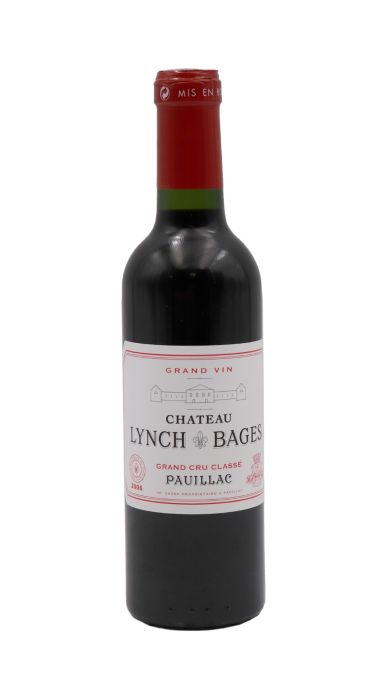
2006 Lynch Bages

94 RP

Availability:
Featured Review
This classic, powerful, firm Lynch Bages may be as concentrated (if not more so) than the 2005. It possesses a dense purple-tinged color, tell-tale cassis notes interwoven with hints of roast beef, savory herbs, spice box and subtle oak, good acidity and ripe tannin. The result is a full-bodied, fleshy Pauillac that will benefit from another 3-4 years of cellaring. It is capable of lasting 20-25 more years. Robert Parker

Robert Parker | 94 RP

Critic Reviews

This classic, powerful, firm Lynch Bages may be as concentrated (if not more so) than the 2005. It possesses a dense purple-tinged color, tell-tale cassis notes interwoven with hints of roast beef, savory herbs, spice box and subtle oak, good acidity and ripe tannin. The result is a full-bodied, fleshy Pauillac that will benefit from another 3-4 years of cellaring. It is capable of lasting 20-25 more years.

Robert Parker | 94 RP
Slowly and confidently inching towards its drinking window, but needs another three to five years before it gets there. Deep plush fruit with tight liquorice root and menthol edging against rich blackberry coulis. Beautiful subtle tension and complexity on display. Really a huge amount that uncurls slowly in the glass. Very seductive. Drinking Window 2018 - 2040

Decanter | 94 DEC
Year after year, Lynch-Bages is able to produce sumptuous wines, typically rich, powerful and structured. This is solid, the blackberry ripe fruit enveloping this structure with a velvet sheen. This is developing into one of the successes of the vintage.

Wine Enthusiast | 94 WE
Blackberry, licorice and mint aromas lead to a full-bodied palate, with velvety tannins and lots of blackberry and mineral fruit character. Shows outstanding concentration and balance. Best after 2014.

Wine Spectator | 92 WS
Very focused and pretty now, with currants, minerals and hints of dried flowers. Full body with super-integrated tannins and a long, long finish. Beautiful. Drink or hold.

James Suckling | 92 JS
(Château Lynch Bages) The 2006 Lynch Bages was raised in eighty percent new oak, which intuitively would have seen a bit excessive in a vintage such as ’06, but the wine has worked out well and looks to be a fine example of the year. The nose is deep and lovely, as it offers up a complex mélange of cassis, black cherries, tobacco, herb tones, gravel, espresso and toasty new oak. On the palate the wine is medium-full, long and suave on the attack, with a fine core of fruit, plenty of ripe, well-integrated tannins and fine length and grip on the nascently complex finish. (Drink between 2019-2035)

John Gilman | 92 JG
(a blend of 79% cabernet sauvignon, 10% merlot, 10% cabernet franc and 1% petit verdot; 3.54 pH; 6.03 g/l total acidity; 81 IPT; 13.2% alcohol): Fully saturated bright ruby. Currently in a slightly dumb phase and aromatically compressed on the nose, revealing cool blackberry and cassis aromas with extended aeration, complicated by notes of cola, flowers, red cherry and sweet spices. Then soft, round and ripe in the mouth, with persistent flavors of black cherry, cassis and cinnamon. A very serious wine offering impressive definition and very good balance, turning almost austere at the back, but with a pretty, pristine quality to its repeating floral and black fruit notes. Finishes with smooth, building tannins: don’t even think of opening this beauty for another eight to ten years. One of the best vintage for Lynch-Bages in recent memory.

Vinous Media | 91+ VM
While the cedary scent shows this wine’s potential complexity, the tannins bury it for now in extract. It’s as black as ATV tires ripping roots out of the earth as it lays tracks over dark, blueberry flavors. A tough vintage of Lynch-Bages, this needs time to develop past its initial reduction and allow the fruit to come up.

Wine & Spirits | 90 W&S
Wine Details for 2006 Lynch Bages

Type of Wine Bordeaux Red : Picture in your mind a combination of cedar, lead pencil, blackcurrant, plum and mineral aromatics, and texture that caresses your palate like a playful lover. The experience is thrilling from the first whiff to the final seconds of a tannic, generous finish - that is what you'll get from a Bordeaux Red
Varietal Proprietary Blend : Proprietary Blend is a general term used to indicate that a wine is comprised of multiple grape varietals which are either “proprietary” to the winery or is blended and does not meet the required maximum or minimum percentage of a particular varietal. This also is the case for the grape’s place of origin, especially for region, appellation or vineyard designated wines. There are endless examples of blended wines which are labeled as “Proprietary Blend” and in conjunction with each region’s stipulated wine laws and regulations makes for a vast blanket for wines to fall into. Perhaps the simplest example is California; if a wine is to be labeled as Napa Valley Cabernet Sauvignon, it is required to have at least 75% of the varietal (Cabernet Sauvignon) and 85% of the fruit must be cultivated from the Napa Valley wine district. If the wine does not meet the requirements, it is then labeled as Proprietary Blend.

Country France : Wine is the lifeblood that courses through the country of France, pulsing with vigorous pride and determination. Viticulture is not just a hobby or an occupation in France; it is a passion, a cherished tradition that has been passed down through generations of wine stained hands. Winemaking is a beloved art that has been ingrained in the culture, an aptitude instilled in sons by fathers and the hallmark for which France’s reputation was built, allowing it to be renowned as, arguably, the most important wine producing country in the world.


For centuries, France has been producing wines of superior quality and in much greater quantity than any other country in the world. It boasts some of the most impressive wine regions, coveted vineyards and prestigious wines on earth. The regions of Bordeaux, Burgundy, Rhone, Sauternes and Champagne have become the benchmark, for which others aspire to become. Legendary producers such as Chateaux Margaux, Domaine De La Romanee Conti, Chapoutier, d’Yquem and Dom Perignon are idolized world-wide.


France has stamped its name on nearly every style of wine, from the nectar-like sweet Sauternes to hedonistic Chateauneuf Du Papes classic Bordeaux and Burgundy, to its sparkling dominance in Champagne. Many of the most infamous grape varietals in the world, such as Cabernet Sauvignon, Merlot, Pinot Noir and Chardonnay originated in France and are not only beloved, but utilized in the creation of some of the greatest wines on earth. French wine production commands the attention of the wine market year after year. With over 860,000 hectares under vine, and numbers close to 50 million hectoliters of wine produced annually, France dominates the market and sets the standard for not only product quality, but also quantity.


France’s many contributions to the world of wine have been absolutely indispensable. The country is the originator of the term “Premier Cru,” coined the term Terroir (a French term so complex there is no literal translation) and has laid the blueprint for a structured appellation system, which others have implemented in their own countries. French vineyard techniques and winemaking practices are mimicked world-wide. California vintners have been replicating Rhone style wines for decades, South America has adopted the French varietal of Malbec and countries around the world are imitating Burgundian styled Chardonnay and Pinot Noir.


With vast diversity in terroir, France is home to some of the most hospitable winegrowing locations on earth. The combination of topography, geology, climate, rainfall and even the amount of sunlight combined with the long historical tradition of winegrowing and making, has allowed the vintners of France to not only hone their skills, but learn from nature to create a product that like the world in which it resides… is very much alive.


Region Bordeaux : Even among the greatest and most reputable wine regions on the planet, Bordeaux stands above the rest. The winemakers of this region have a single-minded dedication to the fine art of viticulture and their efforts never fail to show. If you consider yourself a fine wine enthusiast, you owe it to yourself to visit Bordeaux - life changing. Whether you wish to drink some inspirational and gripping wine as soon as possible, or you want to add some masterpieces to your collection, no region on Earth is a more obvious choice.

The noble and beautiful Garonne and Dordogne rivers surge through southwestern France, enriching the soil in a way very few other places can boast. The limestone-based earth is rich in calcium, and the almost oceanic climate conditions give the staple Bordeaux grape varietals vigor and flavor like nowhere else. For their illustrious reds, Bordeaux winemakers rely on a proven combination of Cabernet Sauvignon, Malbec, Merlot, Cabernet Franc and Petit Verdot. Meanwhile, a sip of their excellent white wine hints at the use of Semillon, Muscadelle and Sauvignon Blanc.Each of these varietals carries a unique identity, making every quality wine a character piece to rival Citizen Kane. It can be incredibly hard to choose only a few wines to collect for your cellar!
Subregion Left Bank
Appellation Pauillac
Cru Fifth Growth

Overview

Producer Chateau Lynch Bages : When a French chateau makes wine, great wine, there is often a coinciding story about the family history, the grape varietals, the terroir and often the winemaker. At Chateau Lynch Bages where there is a long history of success in the Left Bank of the Medoc and perhaps the greatest terroir and growing appellation of Pauillac, there is also a story of how every facet of winegrowing and winemaking come full circle in meticulous fashion.

At Lynch Bages nearly every step of the process is closely monitored under expert tutelage. Key stages take place in the vineyard with Vineyard Manager, Franck Debrais and his team where the vines of Cabernet Sauvignon, Merlot, Petit Verdot and Cabernet Franc are planted and harvested across 100 hectares. The vines are tended to with the utmost care and attention.

In addition to Debrais’ expert direction, Nicolas Labenne, technical manager of winemaking and growing for Lynch Bages with a team of 35 professionals is involved in daily monitoring and inspections of the vineyard. The structuring of the vineyards has undergone impressive improvements since 2006 with the use of satellite technology. Surveys on soil quality have also greatly ensured the genetic winemaking heritage at the chateau. These two incredible developments have allowed the precise mapping and restructuring of vine parcels in order to preserve, enhance and develop the specific nature of each terroir.

The terroir, which is home to three of the four Medoc Premier Grand Cru wines, needs no sugar-coating. As wine expert, writer and author of the World Atlas of Wine, Hugh Johnson states, “If we had to classify Bordeaux communes, Pauillac would certainly come out on top.” Lynch Bages enjoys the appellation’s mild climate and a topography of well-defined outcroppings in the heart of the Medoc on the banks of the estuary of Gironde.

The grape varietals which flourish in the grand terroir of Pauillac are carefully harvested and vinified by hand according to varietal, ripeness levels and soil structure. The aim is to construct individual personalities for each parcel. A true reflection of the Lynch Bages’ terroir is reflected in the wine, itself. Blending takes place in December when a panel of experts oversees the complex composition of fine wine which can vary drastically depending on each parcels’ behavior in relation to the climactic condition of each vintage.

From planting to barreling, to ageing, Lynch Bages has implemented a series of measures that have had an overwhelming effect on the success of the wine. The chateau has taken drastic steps to reducing the impact of winemaking on the environment and the combination of technological advancements and tedious human instinct and efforts have reinforced Lynch Bages’ commitment to excellence and upholding the legacy of Pauillac’s grand reputation and natural landscape.

People also bought:

Need Help Finding the right wine?

Your personal wine consultant will assist you with buying, managing your collection, investing in wine, entertaining and more.

loader
Loading...