Important Notice

By continuing, you agree to our privacy policy, consent to cookies, and confirm you are 21 or older.

I have read and agree to the Privacy Policy and Terms of Service.

YOU MUST BE 21 OR OLDER TO CONTINUE

NYC, Long Island and The Hamptons Receive Free Delivery on Orders $300+

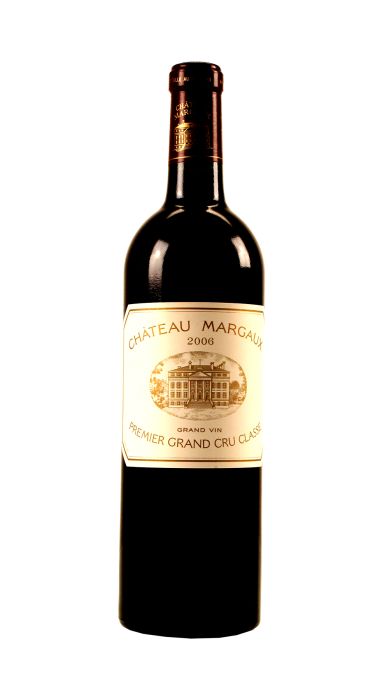
2006 Margaux

96 RPNM

Critic Reviews

It is worth noting that when the bottled 2006 Chateau Margaux, which appeared closed and less impressive than I had predicted from barrel, was retasted alongside the remarkable 2008, I elevated my score to 94+. It does not possess the size or power of the 2008 or 2005, but the 2006 exhibits impressive density, a deeper color, and the beautifully textured, pure style that is a hallmark of this estate. Moreover, it is relatively precocious, and can be drunk now or cellared for 25+ years.

Robert Parker Wine Advocate | 95 RP
(Château Margaux, Margaux, Bordeaux, France, Red) Plenty of tannins still in play, and it is dense, powerful and reserved even at 15 years old. The tertiary notes of cedar, charcoal and crushed mint are just hints at this point, with the purity of Cabernet Sauvignon’s cassis and bilberry fruits very much in the lead. First time that so little Merlot made it into the final blend, which no doubt also explains why the overall construction of the wine is so architectural and firm. Long drawn out finish, with higher acidity than the other wines in this lineup, with brilliant estate signature of precise peony and violet aromatics. You could begin drinking this with a long carafe beforehand, but it will still improve with another five years in bottle; and then go for decades. 100% new oak, 2% Cabernet Franc completes the blend. (Drink between 2023-2042)

Decanter | 95 DEC
This is not a big Château Margaux, its style showing more elegance and discretion. The tannins are soft, although producing a dense web that lies underneath the black currant and plum fruit flavors. It is a wine that envelops the mouth, an edge of firmness over velvet fruit textures. The wine floats away slowly on the close.

Wine Enthusiast | 95 WE
A sexy vintage of Margaux, this is heady and seductive right from the start. Floral strawberry and red currant flavors back the wine’s gentle sweetness, while floral acidity gives it a sting. Black tannins hint at more serious, long-term prospects, though much of the vintage may get drunk before it has a chance to reach any deeper, more essential terroir expression.

Wine & Spirits | 94 W&S
Good deep red-ruby. Deep but reticent aromas of redcurrant, tobacco leaf, licorice and loam; I don’t find the typical floral high notes of Margaux. Juicy, fine-grained and suave, with good definition and a seamless, spherical texture to the currant and soil flavors. Finishes with a fine dusting of tannins, but not the grip or power of earlier barrel samples of this wine.

Vinous Media | 93 VM
On the taut, sinewy side, with cedar and sandalwood notes framing the core of red currant, bitter cherry and damson plum fruit. Offers a lovely singed feel through the finish, with a gentle perfumy edge. Despite the tannic profile of the vintage in general, this is all charm and hitting its stride now.--Non-blind Château Margaux vertical (December 2013). Drink now through 2022.

Wine Spectator | 92 WS
Wine Details for 2006 Margaux

Type of Wine Bordeaux Red : Picture in your mind a combination of cedar, lead pencil, blackcurrant, plum and mineral aromatics, and texture that caresses your palate like a playful lover. The experience is thrilling from the first whiff to the final seconds of a tannic, generous finish - that is what you'll get from a Bordeaux Red
Varietal Proprietary Blend : Proprietary Blend is a general term used to indicate that a wine is comprised of multiple grape varietals which are either “proprietary” to the winery or is blended and does not meet the required maximum or minimum percentage of a particular varietal. This also is the case for the grape’s place of origin, especially for region, appellation or vineyard designated wines. There are endless examples of blended wines which are labeled as “Proprietary Blend” and in conjunction with each region’s stipulated wine laws and regulations makes for a vast blanket for wines to fall into. Perhaps the simplest example is California; if a wine is to be labeled as Napa Valley Cabernet Sauvignon, it is required to have at least 75% of the varietal (Cabernet Sauvignon) and 85% of the fruit must be cultivated from the Napa Valley wine district. If the wine does not meet the requirements, it is then labeled as Proprietary Blend.

Country France : Wine is the lifeblood that courses through the country of France, pulsing with vigorous pride and determination. Viticulture is not just a hobby or an occupation in France; it is a passion, a cherished tradition that has been passed down through generations of wine stained hands. Winemaking is a beloved art that has been ingrained in the culture, an aptitude instilled in sons by fathers and the hallmark for which France’s reputation was built, allowing it to be renowned as, arguably, the most important wine producing country in the world.


For centuries, France has been producing wines of superior quality and in much greater quantity than any other country in the world. It boasts some of the most impressive wine regions, coveted vineyards and prestigious wines on earth. The regions of Bordeaux, Burgundy, Rhone, Sauternes and Champagne have become the benchmark, for which others aspire to become. Legendary producers such as Chateaux Margaux, Domaine De La Romanee Conti, Chapoutier, d’Yquem and Dom Perignon are idolized world-wide.


France has stamped its name on nearly every style of wine, from the nectar-like sweet Sauternes to hedonistic Chateauneuf Du Papes classic Bordeaux and Burgundy, to its sparkling dominance in Champagne. Many of the most infamous grape varietals in the world, such as Cabernet Sauvignon, Merlot, Pinot Noir and Chardonnay originated in France and are not only beloved, but utilized in the creation of some of the greatest wines on earth. French wine production commands the attention of the wine market year after year. With over 860,000 hectares under vine, and numbers close to 50 million hectoliters of wine produced annually, France dominates the market and sets the standard for not only product quality, but also quantity.


France’s many contributions to the world of wine have been absolutely indispensable. The country is the originator of the term “Premier Cru,” coined the term Terroir (a French term so complex there is no literal translation) and has laid the blueprint for a structured appellation system, which others have implemented in their own countries. French vineyard techniques and winemaking practices are mimicked world-wide. California vintners have been replicating Rhone style wines for decades, South America has adopted the French varietal of Malbec and countries around the world are imitating Burgundian styled Chardonnay and Pinot Noir.


With vast diversity in terroir, France is home to some of the most hospitable winegrowing locations on earth. The combination of topography, geology, climate, rainfall and even the amount of sunlight combined with the long historical tradition of winegrowing and making, has allowed the vintners of France to not only hone their skills, but learn from nature to create a product that like the world in which it resides… is very much alive.


Region Bordeaux : Even among the greatest and most reputable wine regions on the planet, Bordeaux stands above the rest. The winemakers of this region have a single-minded dedication to the fine art of viticulture and their efforts never fail to show. If you consider yourself a fine wine enthusiast, you owe it to yourself to visit Bordeaux - life changing. Whether you wish to drink some inspirational and gripping wine as soon as possible, or you want to add some masterpieces to your collection, no region on Earth is a more obvious choice.

The noble and beautiful Garonne and Dordogne rivers surge through southwestern France, enriching the soil in a way very few other places can boast. The limestone-based earth is rich in calcium, and the almost oceanic climate conditions give the staple Bordeaux grape varietals vigor and flavor like nowhere else. For their illustrious reds, Bordeaux winemakers rely on a proven combination of Cabernet Sauvignon, Malbec, Merlot, Cabernet Franc and Petit Verdot. Meanwhile, a sip of their excellent white wine hints at the use of Semillon, Muscadelle and Sauvignon Blanc.Each of these varietals carries a unique identity, making every quality wine a character piece to rival Citizen Kane. It can be incredibly hard to choose only a few wines to collect for your cellar!
Subregion Left Bank
Appellation Margaux
Cru First Growth

Overview

Producer Chateau Margaux : With a story that could aptly begin with, “Once upon a time,” Chateau Margaux’s history is rich and extensive, filled with allure and prestige. Arriving at a time when countries outside of France were drinking “claret,” a pale wine that didn’t age well, Margaux became the epitome for the art of wine-making and the hierarchy between the different Bordeaux growths was already being drawn up. Chateau Margaux was born into greatness at an opportune time.

Dating back to the 12th century, the property was originally known as “Le Moth de Margaux” (The Margaux Mound), but not by chance as any raised mound of land in a rather flat region is easily distinguished. Furthermore, it is notorious for its sloping land that ensures good drainage, which aides in the growth and vitally of the greatest vines. The property came under the ownership of the Lestonnac family in 1572, who formed it into the estate that we very much know today. Its 265 hectares has not been divided since, and remains as it did then. One third of the property is harvested, while the rest is left for greenery parks and forestry.

Long before gaining the status of First Growth in the 1855 Classification of Bordeaux wines, it was drawing the interest of enthusiasts the world over. In 1705, the London Gazette advertised the first auction of great Bordeaux growths and 230 barrels of “Margose” sold. The 1771 vintage was the first “claret” to appear in a Christie’s catalogue. At a time when commerce was strained due to the lack of modern transportation, it was an incredible feat to have Margaux wines resting on the tables of Americans in the late 1700’s. Thomas Jefferson, the Unites States ambassador to France in the 1780’s was a dedicated consumer as well as collector of Margaux wines. He placed an order in 1784, to which he attached a note stating, “There couldn’t be a better Bordeaux bottle.”

The beautiful manor house, or rather castle, which graces its presence on the Margaux label itself, was constructed by the owner of the property in the early 1800’s. It is recognized and celebrated today, even making its appearances in top Hollywood movies. The label is unmistakable, demanding recognition and respect for all who see it. However, the label is not truly what draws the attention of enthusiasts and collectors but rather the precious and unique liquid that exists within the bottle.

The style of wine produced by Chateau Margaux at its best, blends elegance, purity of fruit, harmony and finesse. It has a charm that is irrefutable. Planted to 75% Cabernet Sauvignon, 20% Merlot, 3% Petit Verdot, and 2% Cabernet Franc, the final blend is 85% Cabernet Sauvignon and is largely celebrated as one of finest wines in the world. As Thomas Jefferson, and America’s third president concluded in 1787, “Chateau Margaux is one of the four vineyards of First Growth quality,” and that very much rings true today.

With the climate and terroir typical for that of the Left Bank of the Gironde, the property does however enjoy the privileged sloping terrain that allows Margaux to have such success. The land is farmed 100% organically, and has a rigorous grape selection process. This process has brought Margaux to the ideal of quality over quantity, bringing their annual production down to a mere 12,000 cases.

The avenues of commerce have improved greatly since its inception; however, much like its former days, the wines are difficult to obtain. Since the 1500’s this illustrious estate, and the only one named for its appellation, has been luring seekers of unimaginable wine the world over. The First Growth wines of Margaux are paramount, the property legendary, and its history an unbelievable and age old tale of achievement on a world class scale.

People also bought:

Need Help Finding the right wine?

Your personal wine consultant will assist you with buying, managing your collection, investing in wine, entertaining and more.

loader
Loading...