Important Notice

By continuing, you agree to our privacy policy, consent to cookies, and confirm you are 21 or older.

I have read and agree to the Privacy Policy and Terms of Service.

YOU MUST BE 21 OR OLDER TO CONTINUE

NYC, Long Island and The Hamptons Receive Free Delivery on Orders $300+
Cool Wine Shippers Now Available.

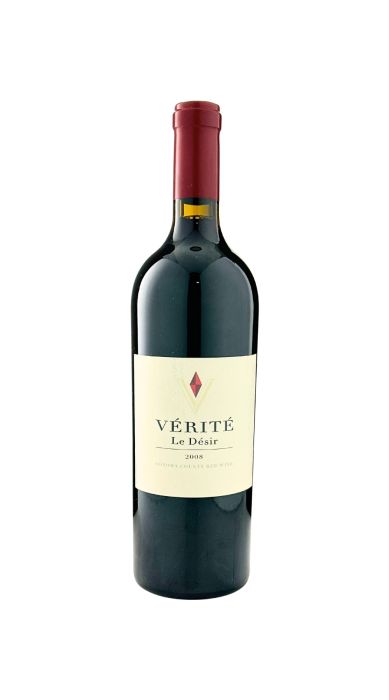
2008 Verite La Desir

100 RP

Availability:
Featured Review
The fruit for this blend of 61% Cabernet Franc, 31% Merlot and the rest Cabernet Sauvignon and Malbec came from Chalk Hill (58%) and Alexander Valley (42%). Pierre Seillan believes the Chalk Hill fruit provides a truffle-like character and the Alexander Valley gives minerality, structure, tannin and intensity. The 2008 will be fascinating to taste next to the 2007 over the next 30+ years. Sweet mulberry, blueberry and blackberry fruit intermixed with notions of black truffles, damp earth and forest floor emerge from this beauty of stunning intensity, purity and texture. The alcohol is 14.4% and the relatively elevated pH is 3.76. Robert Parker

Robert Parker | 100 RP

Critic Reviews

The fruit for this blend of 61% Cabernet Franc, 31% Merlot and the rest Cabernet Sauvignon and Malbec came from Chalk Hill (58%) and Alexander Valley (42%). Pierre Seillan believes the Chalk Hill fruit provides a truffle-like character and the Alexander Valley gives minerality, structure, tannin and intensity. The 2008 will be fascinating to taste next to the 2007 over the next 30+ years. Sweet mulberry, blueberry and blackberry fruit intermixed with notions of black truffles, damp earth and forest floor emerge from this beauty of stunning intensity, purity and texture. The alcohol is 14.4% and the relatively elevated pH is 3.76.

Robert Parker | 100 RP
Tasting this gives you a glimpse of what is to come from the 2018. Supremely grand and elegant, a much broader structure as the tannins have relaxed their grip, the net has opened and with it, given access to the pathways of flavour which are energised by the freshness of acidity. Complex chains of flavour make this a difficult wine to categorise or even describe. What is clear is that the wine is beginning to unfurl, giving a glimpse of the beauty and array of flavours and sensations to come. The very essence of desire.

Decanter | 98 DEC
The 2008 vintage presented challenges for Cabernet Sauvignon, but this Cabernet Franc-based blend succeeds wildly. It's bone dry, tannic and enormously complex, with flavors of sour-cherry candy, red currant, licorice and spicy cola. Ninety-five percent new oak lends this a wonderful toastiness. Few wines could handle that much new wood, but this one can. However, it's very tannic. You can drink it now, but it should blossom after 2014.

Wine Enthusiast | 97 WE
(14.3% alcohol): Bright ruby-red. More brooding on the nose than La Muse, showing aromas of dark plum, black cherry, licorice and spices, along with some chocolatey oak. Even suaver than La Muse, benefiting from lovely violet lift from the Cabernet Franc component but missing the herbal pungency of the Muse. Plenty of tannic support here but this is a creamier and more harmonious wine even if it's still young. Tannins are fine-grained and broad, reaching the front teeth and incisors but nicely buffered by the wine's fruit and minerality. Finishes with terrific rising length and verve.

Vinous Media | 94+ VM
Firm and well-built, with a chewy core of tannins wrapped around savory herb, cedar, dried berry and currant. Very Bordeaux-like in its structure. Cabernet Franc, Merlot, Malbec and Petit Verdot. Best from 2014 through 2024.

Wine Spectator | 90 WS
Wine Details for 2008 Verite La Desir

Type of Wine California Red : Whether it's Cabernet Sauvignon, Merlot, Syrah or Zinfandel, Californian red wine producers have a lovely habit of taking a varietal and expressing its essence in a unique, never before seen way. From Napa Valley to the regions south of Los Angeles, there's a red for everyone - and it's never too late to start exploring.
Varietal Proprietary Blend : Proprietary Blend is a general term used to indicate that a wine is comprised of multiple grape varietals which are either “proprietary” to the winery or is blended and does not meet the required maximum or minimum percentage of a particular varietal. This also is the case for the grape’s place of origin, especially for region, appellation or vineyard designated wines. There are endless examples of blended wines which are labeled as “Proprietary Blend” and in conjunction with each region’s stipulated wine laws and regulations makes for a vast blanket for wines to fall into. Perhaps the simplest example is California; if a wine is to be labeled as Napa Valley Cabernet Sauvignon, it is required to have at least 75% of the varietal (Cabernet Sauvignon) and 85% of the fruit must be cultivated from the Napa Valley wine district. If the wine does not meet the requirements, it is then labeled as Proprietary Blend.

Country US : As one of the most prolific and innovative wine regions in the world, America is a joy to explore. Most wine connoisseurs will agree that the nation's finest and most compelling wines are being produced today, which means that we have front-row seats to one of the most inspirational stories in wine history. While other regions tend to focus on specific wine styles and have somewhat strict rules as to which varietals you could grow, areas like California have few such restrictions in place. As a result, creative visionaries behind America's most reputable estates have been able to develop compelling, unique, and innovative styles, with a level of terroir expression that rivals even France's largest giants.
Region California : With a history of wine production that dates back to the 18th century, California currently sits as one of the world's most prolific and reputable wine regions. With an area as vast as California, you can expect a colorful collage of terroir profiles, a series of microclimates, and micro-environments that give the wine a unique, memorable appeal. The region's produce is far from homogenized in that sense, and it would take you countless hours to sample all of it. While the region boasts scars from the Prohibition era, it went through what can only be described as a viticultural Renaissance sometime after the 1960s. At that point, California went from a port-style, sweet wine region to a versatile and compelling competitor on the world market. Today, no matter which way your taste in wine leans, you can find a new favorite producer among California's most talented.

Notable sub-regions include legendary names like Napa Valley and Sonoma County, places that any wine lover would die to visit. California's quintessential warm climate allows for incredibly ripe fruit expressions, a style that provides a stark contrast to Old World-inspired, earthy classics. Even where inspiration was clearly taken from staple French appellations, Californian winemakers put their own unique spin on the wine.
Subregion Sonoma County

Overview

Producer Verite

People also bought:

Need Help Finding the right wine?

Your personal wine consultant will assist you with buying, managing your collection, investing in wine, entertaining and more.

loader
Loading...