Important Notice

By continuing, you agree to our privacy policy, consent to cookies, and confirm you are 21 or older.

I have read and agree to the Privacy Policy and Terms of Service.

YOU MUST BE 21 OR OLDER TO CONTINUE

NYC, Long Island and The Hamptons Receive Free Delivery on Orders $300+
Cool Wine Shippers Now Available.

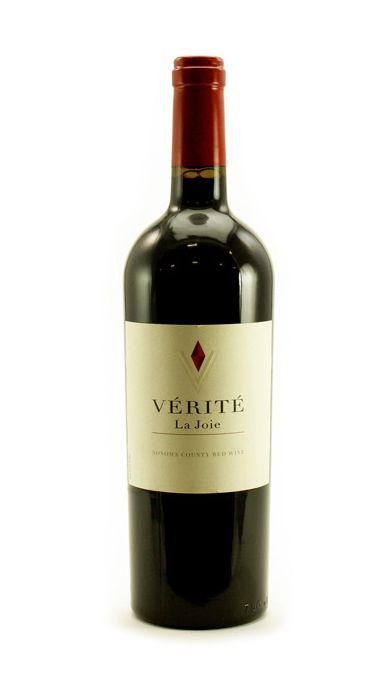
2008 Verite La Joie

99 RP

Featured Review
How much fun collectors will have comparing the 2007 and 2008 La Joies over the next three decades. A blend of 71% Cabernet Sauvignon, 14% Merlot and the rest Cabernet Franc, Petit Verdot and Malbec (48% from Alexander Valley Mountain Estate, 34% from Chalk Hill and 18% from Knight’s Valley), the 2008 has similar technical numbers to the 2007 (a pH of 3.68 and 14.4% alcohol). Wonderful notes of roasted herbs, asphalt, black truffles, blackberries, cassis, camphor and subtle oak are present in the majestic aromatics. In the mouth, the wine is extraordinarily concentrated, pure and dense with amazing length. It is another 30-40 year wine that confirms the confidence the late Jess Jackson had in both his vineyard sources and his winemaker, Pierre Seillan. Robert Parker

Robert Parker | 99 RP

Critic Reviews

How much fun collectors will have comparing the 2007 and 2008 La Joies over the next three decades. A blend of 71% Cabernet Sauvignon, 14% Merlot and the rest Cabernet Franc, Petit Verdot and Malbec (48% from Alexander Valley Mountain Estate, 34% from Chalk Hill and 18% from Knight’s Valley), the 2008 has similar technical numbers to the 2007 (a pH of 3.68 and 14.4% alcohol). Wonderful notes of roasted herbs, asphalt, black truffles, blackberries, cassis, camphor and subtle oak are present in the majestic aromatics. In the mouth, the wine is extraordinarily concentrated, pure and dense with amazing length. It is another 30-40 year wine that confirms the confidence the late Jess Jackson had in both his vineyard sources and his winemaker, Pierre Seillan.

Robert Parker | 99 RP
(14.3% alcohol): Saturated ruby-red. Slightly medicinal aromas of black cherry, tar, licorice, menthol, tobacco leaf and dark chocolate. The sweetest of this trio of '08s on entry, then firm acidity kicks in to keep the fine-grained black cherry, blackberry, mineral and leafy flavors under wraps today. Quite light on its feet and wonderfully energetic in the way of a tightly coiled spring, even if it's not yet showing the texture of the Vérité "Right Bank" blends. Finishes classically dry and very long, with some medicinal reserve and a firm tannic spine to ensure a very long life in bottle.

Vinous Media | 94+ VM
Right now this is not typically soft and lush like a cult Cab, but hard in tannins, with minerality like little particles of granite. Buried deep down is a pirate's treasure of ripe, intense blackberry fruit. New oak, to the tune of 94%, doesn't cloud the wine, suggesting this blend's its intensity and concentration. The wine is comprised of all five classic Bordeaux varieties, sourced throughout Sonoma County. Clearly this is one for the cellar; drink after 2018.

Wine Enthusiast | 94 WE
There's a sweet oaky toastiness on the lively and elegant blackberry nose. Full-bodied and mellow, this rich and concentrated wine shows restraint and a persistent freshness. It lacks a little depth and energy but it's stíll vigorous and long. Drinking Window 2019 - 2030.

Decanter | 92 DEC
Wine Details for 2008 Verite La Joie

Type of Wine California Red : Whether it's Cabernet Sauvignon, Merlot, Syrah or Zinfandel, Californian red wine producers have a lovely habit of taking a varietal and expressing its essence in a unique, never before seen way. From Napa Valley to the regions south of Los Angeles, there's a red for everyone - and it's never too late to start exploring.
Varietal Proprietary Blend : Proprietary Blend is a general term used to indicate that a wine is comprised of multiple grape varietals which are either “proprietary” to the winery or is blended and does not meet the required maximum or minimum percentage of a particular varietal. This also is the case for the grape’s place of origin, especially for region, appellation or vineyard designated wines. There are endless examples of blended wines which are labeled as “Proprietary Blend” and in conjunction with each region’s stipulated wine laws and regulations makes for a vast blanket for wines to fall into. Perhaps the simplest example is California; if a wine is to be labeled as Napa Valley Cabernet Sauvignon, it is required to have at least 75% of the varietal (Cabernet Sauvignon) and 85% of the fruit must be cultivated from the Napa Valley wine district. If the wine does not meet the requirements, it is then labeled as Proprietary Blend.

Country US : As one of the most prolific and innovative wine regions in the world, America is a joy to explore. Most wine connoisseurs will agree that the nation's finest and most compelling wines are being produced today, which means that we have front-row seats to one of the most inspirational stories in wine history. While other regions tend to focus on specific wine styles and have somewhat strict rules as to which varietals you could grow, areas like California have few such restrictions in place. As a result, creative visionaries behind America's most reputable estates have been able to develop compelling, unique, and innovative styles, with a level of terroir expression that rivals even France's largest giants.
Region California : With a history of wine production that dates back to the 18th century, California currently sits as one of the world's most prolific and reputable wine regions. With an area as vast as California, you can expect a colorful collage of terroir profiles, a series of microclimates, and micro-environments that give the wine a unique, memorable appeal. The region's produce is far from homogenized in that sense, and it would take you countless hours to sample all of it. While the region boasts scars from the Prohibition era, it went through what can only be described as a viticultural Renaissance sometime after the 1960s. At that point, California went from a port-style, sweet wine region to a versatile and compelling competitor on the world market. Today, no matter which way your taste in wine leans, you can find a new favorite producer among California's most talented.

Notable sub-regions include legendary names like Napa Valley and Sonoma County, places that any wine lover would die to visit. California's quintessential warm climate allows for incredibly ripe fruit expressions, a style that provides a stark contrast to Old World-inspired, earthy classics. Even where inspiration was clearly taken from staple French appellations, Californian winemakers put their own unique spin on the wine.
Subregion Sonoma County

Overview

Producer Verite

People also bought:

Need Help Finding the right wine?

Your personal wine consultant will assist you with buying, managing your collection, investing in wine, entertaining and more.

loader
Loading...