Important Notice

By continuing, you agree to our privacy policy, consent to cookies, and confirm you are 21 or older.

I have read and agree to the Privacy Policy and Terms of Service.

YOU MUST BE 21 OR OLDER TO CONTINUE

NYC, Long Island and The Hamptons Receive Free Delivery on Orders $300+
Cool Wine Shippers Now Available.

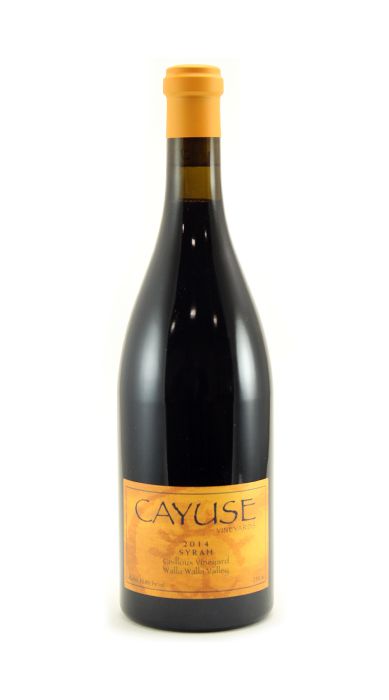
2014 Cayuse Syrah Cailloux Vineyard

100 RP

Featured Review
Incorporating a touch more Viognier than normal, the 2014 Syrah Cailloux Vineyard is 93% Syrah and 7% Viognier from the first vineyard planted in the stones region of Walla Walla. Sporting a surprisingly deep, inky color, it offers a heavenly bouquet of black olives, tobacco leaf, smoked meats, pepper, blackcurrant and black cherry notes. Deep, rich and ever changing in the glass, with incredible complexity and layers, this full-bodied masterpiece has building tannin, a stacked mid-palate and a great, great finish. It's pure perfection in Syrah, and the finest vintage of this cuvee ever made. As a bonus, it’s also the largest production Syrah they produce. Bravo! Robert Parker Wine Advocate

Robert Parker | 100 RP

Critic Reviews

Incorporating a touch more Viognier than normal, the 2014 Syrah Cailloux Vineyard is 93% Syrah and 7% Viognier from the first vineyard planted in the stones region of Walla Walla. Sporting a surprisingly deep, inky color, it offers a heavenly bouquet of black olives, tobacco leaf, smoked meats, pepper, blackcurrant and black cherry notes. Deep, rich and ever changing in the glass, with incredible complexity and layers, this full-bodied masterpiece has building tannin, a stacked mid-palate and a great, great finish. It’s pure perfection in Syrah, and the finest vintage of this cuvee ever made. As a bonus, it’s also the largest production Syrah they produce. Bravo!

Robert Parker Wine Advocate | 100 RP
Christophe Baron’s first Walla Walla vineyard was planted in The Rocks region in 1997. The wine resembles a CĂ´te-RĂ´tie in character and is always one of my favourites. It’s a co-fermented blend of 93% Syrah and 7% Viognier and seems to have everything: floral aromas with notes of olives, smoked meat and black pepper, and long, layered savoury, charcoal flavours. It’s charged with energy, plus firm structure and a soft succulence. Drinking Window 2020 - 2034.

Decanter | 97 DEC
Impressively well-built and expressive, with evocative raspberry and smoky bacon aromas and sleek, dynamic black cherry, crushed rock and green olive flavors that build momentum toward refined tannins. Drink now through 2025. 857 cases made.

Wine Spectator | 95 WS
Pepper, fresh-turned earth and wet stones here. A wealth of sappy, graphite-infused plums and black cherries. Very complex and soulful. The palate delivers power with detail and finesse in a savory mode. The flavors of ripe cherries hold long and pure amid finely groomed, lacy tannins. Drink or hold.

James Suckling | 94 JS
The aromas of this wine leap from the glass, with notes of orange peel, potpourri, smoked meat, spice, fresh herb, stem, ash and plum. It’s expressive, but still wound up. The flavors are focused, concentrated and savory, bringing a sense of intensity and richness but also lightness. The balance is exquisite.

Wine Enthusiast | 94 WE
(aged in 15% new oak foudres; about 50% of the Syrah was vinified with whole clusters): Bright ruby-red. Multidimensional scents of black raspberry, raw green peppercorn, peat moss, whiskey, lilac, violet and wild herbs; plenty of stem complexity here. Juicy and a bit youthfully imploded in the mouth, conveying lovely definition and a light touch to its savory flavors of black raspberry, garrigue and lavender. Still a bit youthfully inky, and tight and firmly tannic on the long, salty, ultimately stylish aftertaste. Lovely precision and finesse here; while the wine is listed at a moderate 13.6% alcohol, there’s nothing early-picked about this wine. Baron predicts that this will be best seven or eight years after the vintage, by which time it will be showing truffle and earth notes and less baby fat. The lightest and driest of this trio of vineyard-designated 2014 Syrahs: will it match the 2013 version with bottle age?

Vinous Media | 93+ VM
Wine Details for 2014 Cayuse Syrah Cailloux Vineyard

Type of Wine Washington Red
Varietal Shiraz/Syrah : Something magical occurred when two ancient French grapes procreated and the varietal of Syrah entered the world of winegrowing. The exact time period of its inception is still undetermined; however, the origin of Syrah’s parentage confirms it was birthed in the Rhone Valley. DNA testing performed by UC Davis has indicated that Syrah is the progeny of the varietals Dureza and Mondeuse Blanche, both of Rhone origin. Syrah dominates its native homeland of Northern Rhone and has become one of the most popular grape varietals in the world.

Syrah, Shiraz and Petite Sirah have often been confused and misunderstood, some consumers believing them to all be the same grape, while others thinking the opposite. Petite Sirah is actually the offspring of Syrah and Peloursin and though related, is an entirely different grape variety. Its official name is Durif, for the name of the French nurseryman who first propagated the varietal in the 1880s; it is called Petite Sirah in California (due to the resemblance of Syrah, but smaller berries). Syrah and Shiraz are the same grape. Producers in Australia have been labelling Syrah as “Shiraz” since James Busby first introduced the varietal to the continent. The Scottish viticulturist brought Syrah from France to Australia in the middle of the 18th century and labelled the cuttings as “Sycras” and “Ciras,” which may have led to the naming. Most California vintners label their bottlings as Syrah and of course in French style and tradition, the name of the village or area the grape is cultivated dictates the label name.

The Syrah grape is at home in Northern Rhone where the climate is cool and the terroir is filled with gravel, schist, limestone, iron, granite and sandy soils. It thrives on rocky, hilly terrain with a southern exposure, due to its need for sunlight. Syrah is a very vigorous grape with a spreading growth habit. The berries are small to medium oval shaped blue-black and tend to shrivel when ripe.

Today, Syrah is one of the most popular and widely planted grape varietals in the world, covering almost 190,000 hectares across the earth’s surface. It is the only red grape variety permitted by AOC regulations in the appellations of Hermitage and Cote-Rotie, where it has breathed life into some of the most tremendous wines on the planet. Languedoc-Roussilon has the most surface area planted in France with 43,200 hectares dedicated to Syrah. The varietal is used for blending in Southern Rhone, Provence and even Bordeaux. Syrah has spread worldwide from Australia to California and South Africa to Spain creating the ‘New World’ hype of the varietal. Since the 1990’s, Syrah winegrowing and production has increased exponentially; for example, in 1958 there were a mere 2,000 hectares planted in France. By 2005 that number increased to over 68,000 hectares and today it is well over 70,000. The same holds true for California, Australia and other ‘New World’ producers that have jumped “all in.” World-wide there are approximately 190,000 hectares of Syrah currently being cultivated.

The allure of Syrah has taken the world by storm, but is important to note where the hype began. Long before Syrah was being stamped with ‘New World’ or of ‘cult status,’ the tremendous quality of Hermitage was being written about in Thomas Jefferson’s diary. Today, the grape variety can be grown, fashioned, named and enjoyed in a myriad of ways, but the quality of Syrah grape remains the same – incredible.

Country US : As one of the most prolific and innovative wine regions in the world, America is a joy to explore. Most wine connoisseurs will agree that the nation's finest and most compelling wines are being produced today, which means that we have front-row seats to one of the most inspirational stories in wine history. While other regions tend to focus on specific wine styles and have somewhat strict rules as to which varietals you could grow, areas like California have few such restrictions in place. As a result, creative visionaries behind America's most reputable estates have been able to develop compelling, unique, and innovative styles, with a level of terroir expression that rivals even France's largest giants.
Region Washington : While California definitely owns the spotlight when it comes to excellent American wines, Washington winemakers should certainly not be underestimated. While their traditional focus was set firmly on refreshing, illustrious white wines, they've adopted French red varietals like Merlot and Cabernet Sauvignon. Since then, they've been achieving excellence in both categories and can compete with the world's most prestigious viticultural titans.

Flavor-wise, you can expect a healthy amount of variety when it comes to Washington's finest wines. From acidic and fruity bottles that can shake you up from even the deepest slumber or sadness to rich and ripe powerhouses that command the respect of everyone in the room after as much as a single whiff. Juicy raspberries that gently tickle your tongue, deep and noble blackberries, intense cherries and earthen oak - these are the flavors that characterize this region, despite the presence of an entire orchestral symphony of other aromatic notes. A sampling of fine wine from Washington is a lot like being seduced, so why not uncork one of these bottles for a potential or existing partner? With a drink of this quality, those romantic sparks will turn into a fireworks display, as your emotions are laid bare and intensified, and you make a connection that can last a lifetime.
Subregion Columbia Valley
Appellation Walla Walla
Climat/Vineyard Cailloux Vineyard

Overview

Producer Cayuse Vineyards : The Domaine of Cayuse is located in the Stones of the Walla Walla Valley, where it is said “The Stones hold the secret.” Over the past twenty years, Christophe Baron has made it his mission to carve out food-friendly wines of incredible depth and character from the almost mythical plot of treasured, and now historic land.

The young and impetuous, French Vigneron visited the little-known town of Walla Walla and fell in love with its seemingly useless stone covered farmland. There were many who doubted such a venture could turn bountiful. However, that is simply just what happened, silencing the nay-sayers; who are probably still trying to allocate some of his highly sought after wines.

Cayuse produces 3,500 cases of a multitude of varieties; Syrah, Cabernet Franc, Cabernet Sauvignon, Grenache, Merlot, Tempranillo and Viognier. The varietals hail from five different vineyards - Cailloux, Coccinelle, En Cerise, En Chamberlin, and Aramada. The vineyards and their locations are important to the identity of the wines themselves as their true fingerprints are in the minerality. Each wine is true to the unique terroir of the vineyards. Christophe says, “You want to taste the place.”

So… do the stones hold the secret, as a brash, young visiting vigneron believed? Christophe probably deserves more credit himself for his farming methods: which is biodynamical, completely free of chemicals, pesticides and fungicides. His efforts at cultivating the land to develop healthier soil is astounding. But, then again, there is an allure in mythical stories.

People also bought:

Need Help Finding the right wine?

Your personal wine consultant will assist you with buying, managing your collection, investing in wine, entertaining and more.

loader
Loading...