Important Notice

By continuing, you agree to our privacy policy, consent to cookies, and confirm you are 21 or older.

I have read and agree to the Privacy Policy and Terms of Service.

YOU MUST BE 21 OR OLDER TO CONTINUE

NYC, Long Island and The Hamptons Receive Free Delivery on Orders $300+
Cool Wine Shippers Now Available.

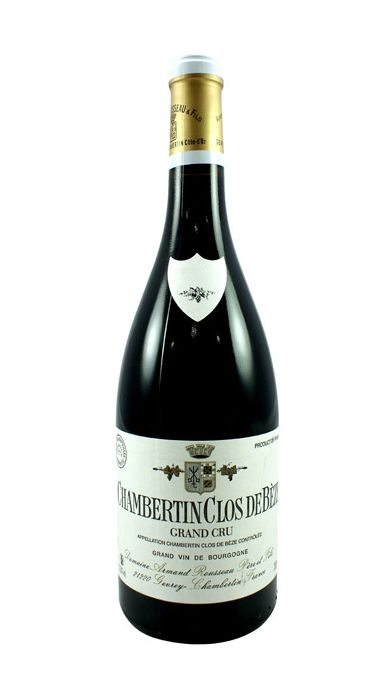
2015 Armand Rousseau Chambertin Clos de Beze

95-98 BH

Critic Reviews

Brooding dark fruits on the nose, super-ripe without any jamminess or overt oakiness. Splendid attack, with power and tension. The firm tannins are much more pronounced than in Chambertin, and provide a lot of grip. Truly adolescent and shouldn’t be broached for years. The fruit is currently submerged beneath the assertive structure - this has 13.7% alcohol without any chaptalisation, hence the power. It may well overtake the more elegant Chambertin in 20 years, but who knows? (Drink between 2022-2050)

Decanter | 98 DEC
The 2015 Clos de Bèze from Domaine Rousseau is brilliant. The bouquet is bottomless and musky in personality, albeit, more reserved at the present time than the Chambertin, offering up scents of red plums, cherries, gamebird, very complex soil tones, raw cocoa, hints of fresh nutmeg, exotic spices and cedary oak. On the palate the wine is deep, full-bodied, focused and sappy at the core, with great soil signature, ripe and seamless tannins, tangy acids and laser-like focus on the very, very long and potentially brilliant finish. This will need plenty of time to blossom, but it will be a legend! (Drink between 2030-2100

John Gilman | 98 JG
The 2015 Chambertin-Clos de Bèze Grand Cru is spectacular, wafting from the glass with a dramatic bouquet of sweet grilled meat, red and black fruit, candied peel and rich soil. On the palate, the wine is full-bodied, ample and powerful, with a lavishly gourmand attack that evokes the 2009 rendition, but this quickly segues into the mid-palate of an altogether more tautly structural, serious wine, its considerable dimension and concentration underwritten by racy acids. The finish is long and firm. This is a monumental Clos de Bèze built for the long haul.

Robert Parker Wine Advocate | 97 RP
Once again the wood treatment is in evidence but it’s by no means intrusive as it easily allows for the clear expression of the plum, black cherry, lavender, violet and tea aromas. The exceptionally rich and impressively dense broad-shouldered flavors also exhibit excellent minerality and almost as much power on the massively long finish. As is usually the case when one compares these two wines, this is finer and offers a distinctly different expression than the Chambertin. The Bèze typically shows a bit better and more completely young and then after 15 to 20 years the Chambertin often surpasses it. Which you will like better is often very much a question of preference but in 2015 the Chambertin appears to hold the slightest of edges. Time will of course tell but it would be fair to observe that they both possess enormous development potential. (Drink starting 2035)

Burghound | 97 BH
The 2015 Chambertin Clos-de-Bèze Grand Cru has to address some reduction issues at first, although there is plenty of brambly red berry fruit, cranberry and pomegranate on the nose. The palate is medium-bodied with very fine tannin and layers of red and black fruit infused with crushed stone and veins of blue fruit. There is wonderful harmony and tension here, and real precision and intensity toward the finish that testify to the greatness of the 2015 vintage. Serious, delicious and quite compelling. Expect that plus sign against my score to come into play as this Clos-de-Bèze matures in bottle. Tasted blind at the annual Burgfest tasting.

Vinous Media | 95+ VM
Wine Details for 2015 Armand Rousseau Chambertin Clos de Beze

Type of Wine Burgundy Red : If you have a craving for some beautiful, mind-expanding Pinot Noir, few regions can match the talent and consistency of Burgundy. The grape almost seems like it evolved for this very region, and its essence will stimulate your senses and arouse your imagination. Drink deep and experience almost spiritual enlightenment.
Varietal Pinot Noir : As one of the oldest grape varieties in the world, Pinot Noir has a long and storied history which began more than 2,000 years ago. This story spans form the time of ancient Roman influence to modern day trailblazing; Old World and New World grape growing. It also involves the most unlikely of “characters” from Cistercian Monks to the Holy Pope and even Hollywood actors; each playing a part in the development of the Noble Pinot Noir grape variety. For a grape that appears simple on the surface, it may be one of the most complex varietals on earth, playing a major role in the formation of some of the most profound and distinguished winegrowing regions in the world.

Pinot Noir’s exact origin remains relatively unknown as it is far too ancient to have been recorded precisely. It is thought to have been cultivated in the rocky hillsides of Burgundy by Roman hands as early as the 1st Century AD. At that time, Roman agronomist Columella identified and tasted wine that very much seems to be consistent with today’s description of Pinot Noir. There are complex theories on how either the Greeks or Romans took cuttings of Vitis Vinefera (Pinot Noir) from the area of Transcaucasia (modern day Turkey, Iraq and Iran) and brought the wild vines to France. Speculation aside, what we do know is that the wine-loving ancient Romans spread their dominion far and wide, leaving grapevines in their wake. Their innovative devotion to cultivating wine in French soil set in motion, nurtured, and influenced the winegrowing culture that we very much enjoy today.

Around 1000 AD, long after the dismantling of the Roman Empire, the history of Pinot Noir in Burgundy begins to have clarity, greatly due to the extraordinary record keeping of the Cistercian Order of Monks (formed from the Benedictine Order). The Cistercian Monks began gaining authority outside the area of what we know today as Dijon. Devoted to hard labor and prayer, the monks began cultivating the rocky hillsides of early Burgundy, painstakingly documenting detailed records of their vineyards. Centuries of specifying their practices, describing exactly how and exactly where vines thrived or failed and how the resulting wine tasted, the Cistercian Monks unwittingly created the world’s first harvest reports while simultaneously inventing the idea of terroir. These records and the notion that wines reflect their growing locales, permanently shaped the fundamentals of winegrowing and making terroir a critical concept.

This concept really gained attention when Pope Urban V refused to return the Papal court to Rome from Avignon due to unavailability of Burgundy wines south of the Alps. The lack of commerce routes inhibiting the Burgundy wine trade did not affect the Cistercian Order of Monks as they were driven towards higher quality and excellence through religious devotion instead of monetary gain. Both the outward remarks of the Pope and diligent efforts by the monks helped place Burgundy in a class of its own.

Pinot Noir would eventually spread its wings and infiltrate Champagne, Loire and Alsace, Provence, Sancerre and Languedoc, finding hospitable terroir and new purposes along the way. From bubbles to “pink” wine, it adapted to the soil, revealing the terroir through the wine itself. The early developments and manipulation of the Pinot Noir grape within France was a precursor for the inevitable. The varietal spread through Europe and eventually making a trip around the globe landing in the Willamette Valley, Oregon (planted in 1965 by David Lett).

The Pinot Noir grape quickly found a niche in Willamette Valley where it shares the same latitude of 45 degrees north, experiencing similar sunlight as well as a similar cooler climate to that of Burgundy. A few years later it would be introduced to California where it found terroir hotspots in both cool and surprisingly hotter climates, thus spreading to Napa, Sonoma Coast, Russian River Valley, Carneros among others, birthing New World Pinot Noir winemaking. And, of course, there was the Pinot craze that occurred after the release of the movie Sideways which manifested “Pinot snobs” around America. The 2004 American comedy set the market on fire, increasing sales of Pinot Noir in the state of California by 170 percent.

The varietal of Pinot Noir thrives in cool climates with terroir consisting of marl and limestone soils of extremely variable composition that mimics that of its ancestral home of Burgundy. For a grape that is notoriously difficult to grow, Pinot Noir is ubiquitous in winegrowing regions around the world, spanning 115,000 hectares. It may be a fussy grape, but when planted in the right location and climate, it reveals the qualities of its host terroir in many different manners.

The Noble Pinot Noir grape has greatly impacted the world of winegrowing and making while birthing the concept of terroir; from fruit forward Pinots produced in warmer California localities to New World Oregon wines with Burgundian nuances to Rose in Provence, bubbly in Champagne to the infamous Domaine de la Romanee Conti and its eye watering prices and unrivaled quality. Pinot Noir has long lived the quiet, elegant lifestyle giving Old World winemakers and consumers an ethereal pleasure. New World winemaking has granted it the opportunity for worldwide consumption on any budget and creating the Pinot Phenom. The varietal is now enjoying the best of both “worlds.”

Country France : Wine is the lifeblood that courses through the country of France, pulsing with vigorous pride and determination. Viticulture is not just a hobby or an occupation in France; it is a passion, a cherished tradition that has been passed down through generations of wine stained hands. Winemaking is a beloved art that has been ingrained in the culture, an aptitude instilled in sons by fathers and the hallmark for which France’s reputation was built, allowing it to be renowned as, arguably, the most important wine producing country in the world.


For centuries, France has been producing wines of superior quality and in much greater quantity than any other country in the world. It boasts some of the most impressive wine regions, coveted vineyards and prestigious wines on earth. The regions of Bordeaux, Burgundy, Rhone, Sauternes and Champagne have become the benchmark, for which others aspire to become. Legendary producers such as Chateaux Margaux, Domaine De La Romanee Conti, Chapoutier, d’Yquem and Dom Perignon are idolized world-wide.


France has stamped its name on nearly every style of wine, from the nectar-like sweet Sauternes to hedonistic Chateauneuf Du Papes classic Bordeaux and Burgundy, to its sparkling dominance in Champagne. Many of the most infamous grape varietals in the world, such as Cabernet Sauvignon, Merlot, Pinot Noir and Chardonnay originated in France and are not only beloved, but utilized in the creation of some of the greatest wines on earth. French wine production commands the attention of the wine market year after year. With over 860,000 hectares under vine, and numbers close to 50 million hectoliters of wine produced annually, France dominates the market and sets the standard for not only product quality, but also quantity.


France’s many contributions to the world of wine have been absolutely indispensable. The country is the originator of the term “Premier Cru,” coined the term Terroir (a French term so complex there is no literal translation) and has laid the blueprint for a structured appellation system, which others have implemented in their own countries. French vineyard techniques and winemaking practices are mimicked world-wide. California vintners have been replicating Rhone style wines for decades, South America has adopted the French varietal of Malbec and countries around the world are imitating Burgundian styled Chardonnay and Pinot Noir.


With vast diversity in terroir, France is home to some of the most hospitable winegrowing locations on earth. The combination of topography, geology, climate, rainfall and even the amount of sunlight combined with the long historical tradition of winegrowing and making, has allowed the vintners of France to not only hone their skills, but learn from nature to create a product that like the world in which it resides… is very much alive.


Region Burgundy : Situated just west of the beautiful river Saone, the hills and valleys of Burgundy stand as they have stood since medieval times, and you can almost hear the cheerful chatter of vineyard workers from miles away. Indeed, France's identity in the world of wine would be incomplete without the inclusion of Burgundy and its many viticultural achievements. Every little sub-region of the area boasts a unique soil composition, which, when combined with the area's climate conditions, creates an incredibly diverse and appealing selection of fine wines.

Every new bottle is an adventure of its own, and a snapshot of its birthplace. You could spend years sampling great Burgundian wines, and you would still have a lot to learn, which is what makes the region so compelling for veterans and novice wine lovers alike. No matter what your taste in wines may be, there is a winery in Burgundy that could mesmerize your mind and make your senses scream with joy. And what better way to spend a comfy summer afternoon with your friends and family than with a classy bottle from some of the region's most reputable wineries? From the noble slopes of Cote d'Or to the flatlands near various settlements, let us help you on your journey as we explore Burgundy's most delicious and renowned wines.
Subregion Cote de Nuits
Appellation Gevrey Chambertin
Climat/Vineyard Chambertin Clos de Beze
Cru Grand Cru

Overview

Producer Comte Armand

People also bought:

Need Help Finding the right wine?

Your personal wine consultant will assist you with buying, managing your collection, investing in wine, entertaining and more.

loader
Loading...