Important Notice

By continuing, you agree to our privacy policy, consent to cookies, and confirm you are 21 or older.

I have read and agree to the Privacy Policy and Terms of Service.

YOU MUST BE 21 OR OLDER TO CONTINUE

NYC, Long Island and The Hamptons Receive Free Delivery on Orders $300+
Cool Wine Shippers Now Available.

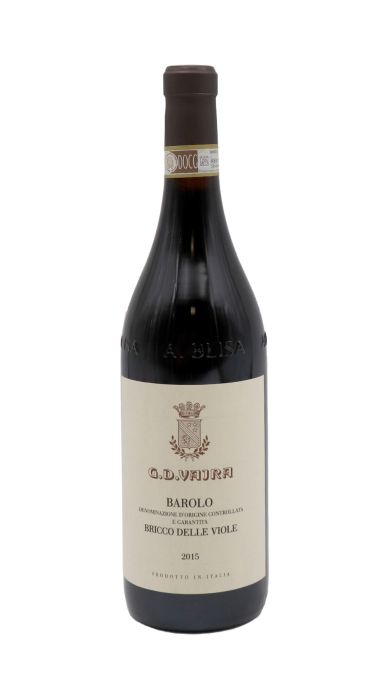
2015 G.D. Vajra Barolo Bricco delle Viole

93+ VM

Critic Reviews

You’ll find enticing scents of rose, violet, woodland berry, tobacco and a heady whiff of pine on this fragrant, full-bodied red. The juicy, delicious palate shows focus and intensity, doling out succulent raspberry, ripe red cherry, blood orange, licorice and baking spice framed in polished tannins. It’s already showing beautifully but will also offer years of enjoyment. Drink 2020–2027.

Wine Enthusiast | 95 WE
Bricco delle Viole, a cru that rises up to 1,575 feet on the Barolo commune’s western edge, has clear views of the Alps. This wine channels some of that Alpine coolness in its elegant feel: Vibrant acidity propels the wine’s spiced cherry and plum fruit while lush, polished tannins draw it out through a long finish.

Wine & Spirits | 95 W&S
The 2015 Barolo Bricco Delle Viole is a delicate and pure expression of Nebbiolo. The wine shows its naked beauty with pride, provocatively semi-dressed in lacy, floral aromas of wild rose and pressed violets. At this young age, the wine exhibits a gentle mix of fruity and floral characteristics that merge into the bouquet with intrepidness. The fruit from this vineyard within the Barolo township has maintained its freshness and crispness despite the heat of the 2015 growing season. I think it would be a lovely match for a veal piccata and cream sauce, with parsley and capers.

Robert Parker Wine Advocate | 94+ RP
Enticing aromas and flavors of plum, cherry, iron and menthol are folded harmoniously into the lush texture and broad tannins of this long and vibrant red, with licorice, mineral and tobacco elements lingering. Best from 2022 through 2040. 1,200 cases made.

Wine Spectator | 94 WS
The flagship Barolo Bricco delle Viole is quite understated and gracious in 2015. Medium in body, with the persistent tannins that are so typical of this site, the 2015 is lithe, focused and full of energy. The warm vintage notwithstanding, in 2015, Vajra’s Bricco delle Viole is distinctly sinewy and tense. It will offer considerable appeal to readers who find some of the other 2015 Barolos too open and giving in their youthful stage. Kirsch, rose petal, mint and chalky notes build into a finely cut finish. Time in the glass softens some of the youthful, austere contours, but this remains a 2015 Barolo that needs time in bottle to be at its very best.

Antonio Galloni | 93+ AG
Aldo Vajra’s best-known Barolo comes from vineyards at an elevation of 420m, which may explain its elegance, together with Vajra’s skill and experience over many decades. The nose is discreet but lifted, with aromas of raspberries, redcurrants and mint. The attack has splendid zest and good acidity, while the fine-grained tannins also contribute elegance. Textured, with a long and spicy finish. Vajra’s Ravera bottling is equally fine. Drinking Window: 2021 - 2036

Decanter | 92 DEC
Wine Details for 2015 G.D. Vajra Barolo Bricco delle Viole

Type of Wine Barolo : Barolo have cemented their spot as one of Italy's most famous and desirable achievements, decorating the cellars of every serious wine collector. While the grape they're made from is rather dark and dusty-looking, the elixir that comes from this varietal is an almost crystal clear, light red, like a pair of seductive lips glistening in the candlelight.
Varietal Nebbiolo : Nebbiolo is the superstar grape variety and driving force behind the top-quality red wines of northwestern Italy. The Italian winegrowing appellation of Piedmont is covered by a sea of Nebbiolo grape vines. It is the undisputed king of grapes in the twin hillside villages of Barolo and Barbaresco, where some of the world’s most coveted wines hail from.

Quality over quantity is the motto for this subtly powerful grape. A mere 5,500 hectares of Nebbiolo are cultivated around the world, of which, more than 4,000 are found in Langhe and Roero. The varietal has been growing here since the 1st century and has been called Nebbiolo since the 1200’s. Like most ancient grape varietals, there are many speculations as to its true origin, but what is certain is that in the hills of Langhe and Roero, Nebbiolo has found its ideal environment.

Unlike Cabernet Sauvignon which is a versatile grape, Nebbiolo has not thrived when planted in wine regions outside of northern Italy. Nebbiolo is more like the finicky Pinot Noir: difficult to grow and highly reflective of terroir. The varietal thrives on calcareous marl, a lime-rich mudstone that is found on the right back of the Tanaro River (home to Barolo and Barbaresco) where it grows best in its warm climate and ample sunlight. The growing conditions in the hilly areas of Barolo and Barbaresco are optimal and produce some of the most sought after wines not only in Italy, but in the world.

The Nebbiolo vine buds earlier than most grapes grown in Piedmont but harvested last. The berries do not appear until long after flowering, making it very susceptible to poor weather conditions. The name Nebbiolo is thought to have come from the Italian word for fog, nebbia, which is common during the fall when the local hillsides are covered in a ghostly haze.

The iron fist in a velvet glove, which is a witty slogan for the wine of Barolo, can aptly be used to define the Nebbiolo grape itself. The thin-skinned, light colored grape packs a punch, producing wines that are light ruby when young and fades to a pale garnet when older. This characteristic should not be mistaken as watery; wine produced from Nebbiolo is super concentrated and flavorful with high acidity and tannins. When properly vinified, the best vintages will last for decades.

Despite the challenges of this fussy grape, some growers in the “New World” are trying their hand at harvesting Nebbiolo. In South Australia young producers are making wines that are fruiter and less tannic than their Italian counterparts. This novel take on the Italian grape has prompted California, Chile and South Africa to begin small plantings of Nebbiolo.

The iron fist in a velvet glove, the undisputed king of Piedmont and the deceptively powerful Nebbiolo grape may be limited in quantity, much-coveted, nearly exclusive to Italy, demands aging and can sometimes command high prices; the wait, the price and the difficulty in finding it is rewarded with one of the greatest wines made from the mighty Nebbiolo grape varietal.

Country Italy : Italy is renowned as one of the world’s greatest gastronomic havens; from certified Prosciutto di Parma to the sea-side seafood eateries on the island of Sicily. However, this epicurean experience could not possibly be as hedonistic without the ethereal combination of the country’s plethora of fine wines. It seems unfair that a nation should be able to boast, both, some of the world’s greatest cuisine as well as its greatest wines. Italian wine is one of the most sought after in the world, and has become the second most produced in the world, behind only France.


Stretching an impressive 736 miles from northern Italy to the peninsula’s southern tip, the country’s geography generates an enormous array of topography, climate and soil structure. This is an extremely important quality of its winegrowing and making industry which lays claim to nearly 550 different grape varietals, which all desire their own necessities, in terms of terroir and climate.


The still red wines of Italy truly characterize the nation’s vast and expansive terroir; Nebbiolo dominates Piedmont, where Barolo and Barbaresco reign king and queen of the region’s production. Hailing from Brunello di Montalcino in Tuscany, the rockstar Sangiovese grape has become synonymous with greatness. Vin Santo sweet wines have taken on a mighty feat of competing with the glorious wines of Sauternes, and of course, Prosecco. Prosecco, located in Trieste (northeast Italy) and its creation of luxuriously effervescent styles of wine has become Italy’s answer to Champagne. The Glera grape variety, which has become synonymous with the name Prosecco, is the main ingredient and is beloved in the appellation where the village of Prosecco’s name has become world renowned.


The blurred boundary between Italy and the countries of Slovenia and Austria, where German influence still resonates through Friuli wines. The prevalence of Riesling and other such grape varietals is high in this region and have become extremely popular on today’s market.


With nearly 702,000 hectares of grapevines covering the massive and diverse landscape, Italy’s annual average of 48.3 million hectoliters of wine production is second only to France in terms of volume and Spain in terms of hectares of vines. The country is vast and overwhelming when it comes to the culinary arts, but perhaps even this is overshadowed by its production of some of the world’s most sought after wines, whether the omnipresent Chianti to the highly collectible and sought after Amarone della Valpolicalla.


Subregion Barolo

Overview

Producer G.D. Vajra

People also bought:

Need Help Finding the right wine?

Your personal wine consultant will assist you with buying, managing your collection, investing in wine, entertaining and more.

loader
Loading...