| Varietal |
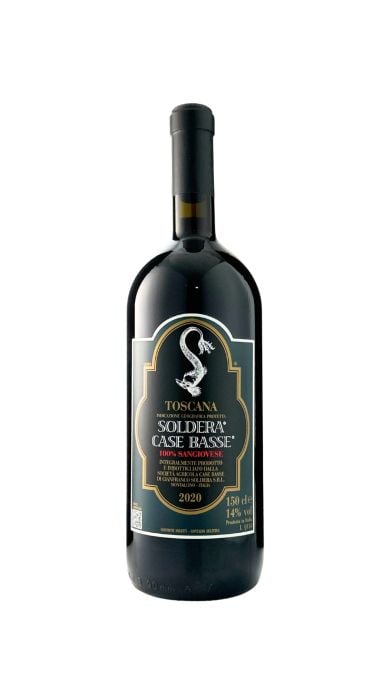
Sangiovese
: When it comes to Tuscan wine, Sangiovese is king. This mighty grape variety resides not only in Tuscany, but throughout Italy. The varietal is responsible for some of the greatest wines in the country, including Chianti, Brunello di Montalcino, Rosso di Montalcino, Vino Nobile di Montepulciano and the infamous “Super Tuscans.” Sangiovese is extremely capable of adapting to the various climates and terroirs of Italy but is quite at home in Tuscany, where it is believed to have been birthed.
Like most ancient grape varieties, there are many speculations about Sangiovese’s true time and place of origin. Some theories claim the Sangiovese grape dates back to the Etruscan era and cultivated mostly in Tuscany. Another theory is that it was cultivated by the ancient Romans. Sangiovese is believed to have been first documented in 1590 by agronomist, Gian Vettorio Soderini who talked about ‘Sanghiogeto” in an essay. There is no definitive evidence that ‘Sanghiogeto’ is the Sangiovese grape that is beloved and famous today; however, it is still considered by many to be the first appearance of the grape in written fashion. It wouldn’t be until the 18th century that Sangiovese would become well-known and started being planted all over the region. It was mentioned in l’Oenologia Toscana, written by Cosimo Villafranchi in 1773, in which he discussed the winemaking process of Chianti and the use of Sangiovese.
Today, Sangiovese accounts for 10% of all winemaking grapes planted in Italy. This statistic may not seem significant but taken into consideration there are 350 authorized grape varieties across 20 wine regions, it is quite remarkable. Due to its versatility, Sangiovese is one of the most diverse grape varieties used in winemaking. However, the grape can be temperamental and sensitive to the environment in which it is planted. It is very much similar to the Pinot Noir in this fashion. Wines made with Sangiovese grapes can turn out tasting extremely different, based on climate, terroir and process. While the varietal can successfully grow most places, it tends to grow best in hot, dry climates with terroir composed mostly of shallow, limestone soils. Famously native to Tuscany but Sangiovese also grows in many other winemaking locations in Italy, such as Umbria in Central Italy, Campania in the South and Romagna where the grape is known as Sangiovese di Romagna.
There are approximately 71,000 hectares of Sangiovese covering the earth’s surface, 62,725 of which reside in Italy (mostly Tuscany). Outside Italy, Sangiovese has grown quite popular in many winegrowing regions around the world, including the French Island of Corsica, where it ranks 2nd among all Sangiovese growing localities. It was introduced to Argentina in the late 19th century by Italian immigrants and remains successful in the region of Mendoza. Although Sangiovese was brought to America in the 1880’s, it was unpopular until the 1980’s when “Super Tuscans” caused a re-emergence of the grape in Napa Valley and Sonoma Coast. Sangiovese has also gained popularity in Barossa Valley in Southern Australia.
The thin skinned, medium sized, blue-black berries of Sangiovese produce medium to full bodied, dry and highly acidic wines with fruity and savory flavors of plum, cherry, licorice, leather, tobacco and dust. Sangiovese may be synonymous with Brunello, and vice-versa, but the world of Sangiovese is far more intricate than a single wine, a single village, hillside town or designated area of control. It is the exclusive varietal and shining star in Brunello di Montalcino and provides the backbone for Chianti and many of the great Italian wines, and has gained an outstanding reputation as one of the world’s great grape varietals.
|
| Country |
Italy
: Italy is renowned as one of the world’s greatest gastronomic havens; from certified Prosciutto di Parma to the sea-side seafood eateries on the island of Sicily. However, this epicurean experience could not possibly be as hedonistic without the ethereal combination of the country’s plethora of fine wines. It seems unfair that a nation should be able to boast, both, some of the world’s greatest cuisine as well as its greatest wines. Italian wine is one of the most sought after in the world, and has become the second most produced in the world, behind only France.
Stretching an impressive 736 miles from northern Italy to the peninsula’s southern tip, the country’s geography generates an enormous array of topography, climate and soil structure. This is an extremely important quality of its winegrowing and making industry which lays claim to nearly 550 different grape varietals, which all desire their own necessities, in terms of terroir and climate.
The still red wines of Italy truly characterize the nation’s vast and expansive terroir; Nebbiolo dominates Piedmont, where Barolo and Barbaresco reign king and queen of the region’s production. Hailing from Brunello di Montalcino in Tuscany, the rockstar Sangiovese grape has become synonymous with greatness. Vin Santo sweet wines have taken on a mighty feat of competing with the glorious wines of Sauternes, and of course, Prosecco. Prosecco, located in Trieste (northeast Italy) and its creation of luxuriously effervescent styles of wine has become Italy’s answer to Champagne. The Glera grape variety, which has become synonymous with the name Prosecco, is the main ingredient and is beloved in the appellation where the village of Prosecco’s name has become world renowned.
The blurred boundary between Italy and the countries of Slovenia and Austria, where German influence still resonates through Friuli wines. The prevalence of Riesling and other such grape varietals is high in this region and have become extremely popular on today’s market.
With nearly 702,000 hectares of grapevines covering the massive and diverse landscape, Italy’s annual average of 48.3 million hectoliters of wine production is second only to France in terms of volume and Spain in terms of hectares of vines. The country is vast and overwhelming when it comes to the culinary arts, but perhaps even this is overshadowed by its production of some of the world’s most sought after wines, whether the omnipresent Chianti to the highly collectible and sought after Amarone della Valpolicalla.
|
| Region |
Tuscany
: Italian culture worships the concept of a shared meal, and their wines scream for a chance to be uncorked with your friends and family. The region's Mediterranean climate and hilly landscape combine to create a beautiful viticultural environment, where every chosen grape is brought to its full potential and transmuted into drinks worthy of gods. The vineyards are planted along the higher reaches of the hill slopes, creating a gorgeous view of the Italian landscape.
Once your lips kiss the wine, you're sent spiraling down a veritable whirlpool of pure flavor, touching upon notes of sensuous cherry, nuts, floral hints and undertones of honey and minerals. The wines can be as sweet as a fresh summer romance, and carry an air of dignity and elegance about them that can stimulate your intellect for months as you contemplate the seemingly infinite intricacies and details in the texture. Tuscany is an important part of Italian viticulture, and sampling their wines is the closest you can get to visiting this heavenly region and experiencing the culture.
|