Important Notice

By continuing, you agree to our privacy policy, consent to cookies, and confirm you are 21 or older.

I have read and agree to the Privacy Policy and Terms of Service.

YOU MUST BE 21 OR OLDER TO CONTINUE

NYC, Long Island and The Hamptons Receive Free Delivery on Orders $300+

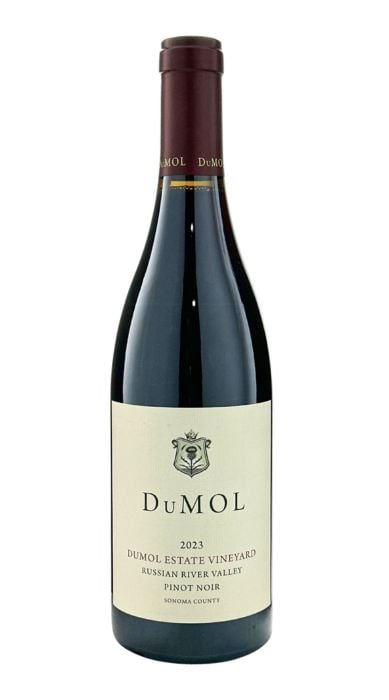
2023 Dumol Pinot Noir Estate

98-100 VM

Availability:

Critic Reviews

The 2023 Pinot Noir DuMOL Estate Vineyard is positively stunning. A blend of Calera and Swan, the 2023 dazzles from start to finish. It embodies all the elements of the DuMOL house style. Vibrant and persistent, the 2023 offers tremendous textural intensity and fine, fine balance. Red/purplish fruit, blood orange, mint, cloves and lavender build into the long, sustained finish. Quite simply, this is one of the very best wines I have ever tasted at DuMOL.

Vinous Media | 98-100 VM
Coming from the vineyards above Bressay, the ruby-hued 2023 Pinot Noir Dumol Estate Vineyard is based on a blend of Calera and Swan clones. It reveals aromas of ripe red cherries, cinnamon, raspberries, orange peel, and wildflowers. The palate has tremendous tension and more wound-up nervous energy, with fantastic linear drive. It’s a spectacular wine that will only improve with another several years in bottle. Drink 2027-2050.

Jeb Dunnuck | 98+ JD
The 2023 Pinot Noir Estate Vineyard comes from Calera and Swan vines planted in 2005. Grapes were harvested on September 14 and 22, and the wine was matured for 15 months in 37% new French oak. "For me, this is the wine of the vintage,” chief winemaker and proprietor Andy Smith says. “I first made this wine in 2007, and for me, this is unquestionably the best wine we’ve ever made from this vineyard.” The estate Pinot Noir is impressively pure and intense, with dramatically unfurling scents of pomegranate, blueberry, iron, juniper, charcuterie and violet. The medium-bodied palate offers expansive, kaleidoscopic flavors. It’s framed by refined, silky tannins and vibrant acidity and has a long, detailed finish. It should be long lived in the cellar. 1,200 cases were made.

Robert Parker Wine Advocate | 97 RP
Gorgeous aromas of concentrated black cherry, pomegranate, Darjeeling and floral potpourri highlight the nose of this Pinot. The palate delivers beautifully balanced tannin and energetic acidity, with flavors of cherry coulis, cocoa powder, sandalwood, sage and orange peel through a long and mouthwatering finish. Delicious now, this will age gracefully for at least a decade.

Wine Enthusiast | 97 WE
A generous, gorgeous, mouth-filling red that’s open and fruity in aromas and saturated with richness on the palate. Moderate tannins and good acidity buoy the raspberry, black cherry, clove, cedar and forest floor flavors. Made from very small berries from vines of the Calera and Swan clones. Drinkable now, but best from 2029.

James Suckling | 96 JS

Wine Details for 2023 Dumol Pinot Noir Estate

Type of Wine California Red : Whether it's Cabernet Sauvignon, Merlot, Syrah or Zinfandel, Californian red wine producers have a lovely habit of taking a varietal and expressing its essence in a unique, never before seen way. From Napa Valley to the regions south of Los Angeles, there's a red for everyone - and it's never too late to start exploring.
Varietal Pinot Noir : As one of the oldest grape varieties in the world, Pinot Noir has a long and storied history which began more than 2,000 years ago. This story spans form the time of ancient Roman influence to modern day trailblazing; Old World and New World grape growing. It also involves the most unlikely of “characters” from Cistercian Monks to the Holy Pope and even Hollywood actors; each playing a part in the development of the Noble Pinot Noir grape variety. For a grape that appears simple on the surface, it may be one of the most complex varietals on earth, playing a major role in the formation of some of the most profound and distinguished winegrowing regions in the world.

Pinot Noir’s exact origin remains relatively unknown as it is far too ancient to have been recorded precisely. It is thought to have been cultivated in the rocky hillsides of Burgundy by Roman hands as early as the 1st Century AD. At that time, Roman agronomist Columella identified and tasted wine that very much seems to be consistent with today’s description of Pinot Noir. There are complex theories on how either the Greeks or Romans took cuttings of Vitis Vinefera (Pinot Noir) from the area of Transcaucasia (modern day Turkey, Iraq and Iran) and brought the wild vines to France. Speculation aside, what we do know is that the wine-loving ancient Romans spread their dominion far and wide, leaving grapevines in their wake. Their innovative devotion to cultivating wine in French soil set in motion, nurtured, and influenced the winegrowing culture that we very much enjoy today.

Around 1000 AD, long after the dismantling of the Roman Empire, the history of Pinot Noir in Burgundy begins to have clarity, greatly due to the extraordinary record keeping of the Cistercian Order of Monks (formed from the Benedictine Order). The Cistercian Monks began gaining authority outside the area of what we know today as Dijon. Devoted to hard labor and prayer, the monks began cultivating the rocky hillsides of early Burgundy, painstakingly documenting detailed records of their vineyards. Centuries of specifying their practices, describing exactly how and exactly where vines thrived or failed and how the resulting wine tasted, the Cistercian Monks unwittingly created the world’s first harvest reports while simultaneously inventing the idea of terroir. These records and the notion that wines reflect their growing locales, permanently shaped the fundamentals of winegrowing and making terroir a critical concept.

This concept really gained attention when Pope Urban V refused to return the Papal court to Rome from Avignon due to unavailability of Burgundy wines south of the Alps. The lack of commerce routes inhibiting the Burgundy wine trade did not affect the Cistercian Order of Monks as they were driven towards higher quality and excellence through religious devotion instead of monetary gain. Both the outward remarks of the Pope and diligent efforts by the monks helped place Burgundy in a class of its own.

Pinot Noir would eventually spread its wings and infiltrate Champagne, Loire and Alsace, Provence, Sancerre and Languedoc, finding hospitable terroir and new purposes along the way. From bubbles to “pink” wine, it adapted to the soil, revealing the terroir through the wine itself. The early developments and manipulation of the Pinot Noir grape within France was a precursor for the inevitable. The varietal spread through Europe and eventually making a trip around the globe landing in the Willamette Valley, Oregon (planted in 1965 by David Lett).

The Pinot Noir grape quickly found a niche in Willamette Valley where it shares the same latitude of 45 degrees north, experiencing similar sunlight as well as a similar cooler climate to that of Burgundy. A few years later it would be introduced to California where it found terroir hotspots in both cool and surprisingly hotter climates, thus spreading to Napa, Sonoma Coast, Russian River Valley, Carneros among others, birthing New World Pinot Noir winemaking. And, of course, there was the Pinot craze that occurred after the release of the movie Sideways which manifested “Pinot snobs” around America. The 2004 American comedy set the market on fire, increasing sales of Pinot Noir in the state of California by 170 percent.

The varietal of Pinot Noir thrives in cool climates with terroir consisting of marl and limestone soils of extremely variable composition that mimics that of its ancestral home of Burgundy. For a grape that is notoriously difficult to grow, Pinot Noir is ubiquitous in winegrowing regions around the world, spanning 115,000 hectares. It may be a fussy grape, but when planted in the right location and climate, it reveals the qualities of its host terroir in many different manners.

The Noble Pinot Noir grape has greatly impacted the world of winegrowing and making while birthing the concept of terroir; from fruit forward Pinots produced in warmer California localities to New World Oregon wines with Burgundian nuances to Rose in Provence, bubbly in Champagne to the infamous Domaine de la Romanee Conti and its eye watering prices and unrivaled quality. Pinot Noir has long lived the quiet, elegant lifestyle giving Old World winemakers and consumers an ethereal pleasure. New World winemaking has granted it the opportunity for worldwide consumption on any budget and creating the Pinot Phenom. The varietal is now enjoying the best of both “worlds.”

Country US : As one of the most prolific and innovative wine regions in the world, America is a joy to explore. Most wine connoisseurs will agree that the nation's finest and most compelling wines are being produced today, which means that we have front-row seats to one of the most inspirational stories in wine history. While other regions tend to focus on specific wine styles and have somewhat strict rules as to which varietals you could grow, areas like California have few such restrictions in place. As a result, creative visionaries behind America's most reputable estates have been able to develop compelling, unique, and innovative styles, with a level of terroir expression that rivals even France's largest giants.
Region California : With a history of wine production that dates back to the 18th century, California currently sits as one of the world's most prolific and reputable wine regions. With an area as vast as California, you can expect a colorful collage of terroir profiles, a series of microclimates, and micro-environments that give the wine a unique, memorable appeal. The region's produce is far from homogenized in that sense, and it would take you countless hours to sample all of it. While the region boasts scars from the Prohibition era, it went through what can only be described as a viticultural Renaissance sometime after the 1960s. At that point, California went from a port-style, sweet wine region to a versatile and compelling competitor on the world market. Today, no matter which way your taste in wine leans, you can find a new favorite producer among California's most talented.

Notable sub-regions include legendary names like Napa Valley and Sonoma County, places that any wine lover would die to visit. California's quintessential warm climate allows for incredibly ripe fruit expressions, a style that provides a stark contrast to Old World-inspired, earthy classics. Even where inspiration was clearly taken from staple French appellations, Californian winemakers put their own unique spin on the wine.

Overview

Producer Dumol

People also bought:

Need Help Finding the right wine?

Your personal wine consultant will assist you with buying, managing your collection, investing in wine, entertaining and more.

loader
Loading...