Important Notice

By continuing, you agree to our privacy policy, consent to cookies, and confirm you are 21 or older.

I have read and agree to the Privacy Policy and Terms of Service.

YOU MUST BE 21 OR OLDER TO CONTINUE

NYC, Long Island and The Hamptons Receive Free Delivery on Orders $300+

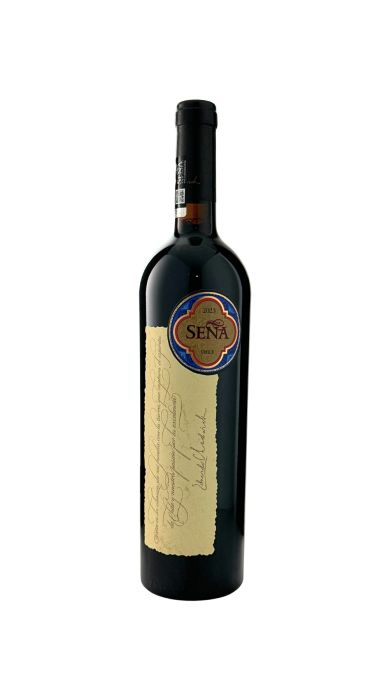
2023 Sena Red Table Wine

99 JS

Availability:

Critic Reviews

This cabernet sauvignon really shines, with subtle paprika, tobacco ash and vibrant red currants on the nose. Nuanced blackberries, blueberries, fine spices and a hint of cigar box. This fresh, lovely Sena comes from a warmer year than 2021 or 2022, with softer tannins. It’s super refined but driven, long and flavorful. More approachable and less structured and direct this year, with impeccable drinkability. 60% cabernet sauvignon, 19% malbec, 15% carmenere and 6% petit verdot. 18 months of aging, of which 90% is in French oak barrels, including 70% new and around 10% in foudres. Drinkable now, but it’s built for the next 20 years.

James Suckling | 99 JS
This vintage of Seña marks the transition between ’eras’ with harvest still under the oversight of Francisco Baettig ahead of the arrival of Emily Faulconer, who then briefly left on maternity leave, with Baettig covering for her. The baton has been successfully passed on and Baettig left a fabulous vintage for Faulconer to start her trajectory at Errazuriz: full of detail and with remarkable purity of flavour. 2023 was a hot vintage in Chile but the Seña site benefited from wide temperature amplitude, allowing the fruit to retain the fine and lively acid that frames the wine from start to finish - and a long finish it is. A mineral nose, with gunpowder and graphite, preludes flavours of ripe wild strawberry, maraschino cherries, plum sorbet and cherry pit. Liquorice, bayleaf and sage, sprinkled with cinnamon and nutmeg, give nuance and definition. Lingering, spicy touch of spicy wild rocket. Drinking superbly now but with a great life ahead of it.

Decanter Magazine | 98 DEC
Using a higher proportion of Carménère than is typical, the 2023 Seña opens with its signature fresh, lifted bouquet driven by mint, spice and red fruit aromas, developing graphite accents and a vanilla-tinged undercurrent with aeration. The palate beautifully balances a suave polish with tensile focus, releasing into a rich, slow-moving finish underpinned by mineral-driven nuances and a touch of refreshing salinity. This impressive showing from Seña in a warm vintage retains admirable freshness and verve. The blend of 60% Cabernet Sauvignon, 19% Malbec, 15% Carménère, 6% Petit Verdot matured for 18 months in barrique and a small portion of foudre.

Robert Parker Wine Advocate | 96 RP
The 2023 Seña is a blend of 60% Cabernet Sauvignon, 19% Malbec, 15% Carménère and 6% Petit Verdot from Ocoa. This aged for 18 months in 70% new French oak barrels, 20% second-use barrels and 10% in large foudres. It opens with forest floor and boldo aromas, followed by lavender, violet and black fruit. The expression is clean and precise. This is dry and taut, with fine-grained, reactive tannins and a long, juicy palate. Despite the warm year, it retains freshness and a graceful character, with a lingering finish and subtle power.

Vinous Media | 95 VM
Elegant yet chiseled, this leads with subtle floral, cocoa bean and tea leaf notes that join the vibrant core of raspberry, Santa Rosa plum and red currant. A wave of mineral freshness lends tension, while hints of cassis and cigar box swirl in alongside a callback to the core fruit. Ends with juicy length and polished tannins. Cabernet Sauvignon, Malbec, Carmenère and Petit Verdot. Drink now through 2038. 12,000 cases made, 2,000 cases imported.

Wine Spectator | 94 WS
Wine Details for 2023 Sena Red Table Wine

Type of Wine Chile Red : Whether you prefer the potency of an elegant Cabernet Sauvignon, the seductive appeal of Syrah, or the compelling puzzle of a top-notch Pinot Noir, Chile has more to offer than you can even imagine. Their wines are more than eloquent when it comes to terroir expression, and they paint these varietals in a heavenly light.
Varietal Proprietary Blend : Proprietary Blend is a general term used to indicate that a wine is comprised of multiple grape varietals which are either “proprietary” to the winery or is blended and does not meet the required maximum or minimum percentage of a particular varietal. This also is the case for the grape’s place of origin, especially for region, appellation or vineyard designated wines. There are endless examples of blended wines which are labeled as “Proprietary Blend” and in conjunction with each region’s stipulated wine laws and regulations makes for a vast blanket for wines to fall into. Perhaps the simplest example is California; if a wine is to be labeled as Napa Valley Cabernet Sauvignon, it is required to have at least 75% of the varietal (Cabernet Sauvignon) and 85% of the fruit must be cultivated from the Napa Valley wine district. If the wine does not meet the requirements, it is then labeled as Proprietary Blend.

Country Chile : Each winegrowing country tends to have a signature grape variety; one that is both beloved by local vintners and one that usually tells a story. Chile is no exception; its key grape is of French origin and one that was considered extinct. Carmenere was thought to have been completely destroyed after the phylloxera outbreak in the 19th Century, but was rediscovered in Chile in the 1990s. It was a major stroke of luck as it has completely re-invigorated the Chilean wine industry. Chile is one of South America’s most important wine producing countries and is often associated with good-value wines. In the last few decades it has become well known for its world-class reds, commanding attention and top-dollar pricing. Names such as Almaviva, Concha y Toro and Casa Lapostolle have become globally recognized, fueling the country’s economy and it’s already thriving wine industry.


Today, the Bordeaux varietal excels in its adopted home and its wide range of terroirs. Since the 1990’s Chilean producers have adapted their vinification methods and extended the ripening period. This has greatly increased the quality of the fruit and the wine produced. Carmenere featured in blends and single variety bottling is continuing to gain traction on the world market. Chile is no “one-trick pony” however, and has made huge strides in competing on the world-level. Bordeaux varieties of Cabernet Sauvignon and Merlot have always been mainstays, while Malbec, Petit Verdot, Cabernet Franc and Malbec have been a supporting cast. Pinot Noir from the cooler parts of Chile is beginning to make an impression and Syrah is increasing in popularity in many wine producing regions. White wine plantings are led by Chardonnay, Sauvignon Blanc, Viognier, Riesling and Semillon, expanding not only the quantity of varietals cultivated, but also many different stylings. This, of course, could not be possible without Chile’s vast array of micro-climates and terroirs.


Chile’s topography is very favorable to viticulture and despite the fact that the country is only 100 miles wide, it does spans 2,700 miles of land running north-south. The thin strip of land is situated between the Pacific Ocean and the Andes Mountains which creates an array of climatic variations. The growing regions are greatly influenced by the Pacific and the Antarctic Humboldt currents, which brings cooling breezes to coastal vineyard, while the sheltering presence of the coastal mountain range makes Chile’s Central Valley relatively warm and dry. The high altitudes of the Andes provides a temperate climate in many places that may be otherwise considered hot and arid, but even more importantly, the melt water supplies natural irrigation, supplying the many regions in the foothills with a much needed water source.


Chile’s location between the Pacific Ocean and the forbidding barrier of the Andes has allowed the country to be spared from phylloxera. It is ironic that a Bordeaux varietal that was nearly exterminated in Europe, survived this world-wide epidemic, only to help revive its protective host’s viticultural industry. Today, Chile has 194,000 hectares under vine, with an annual wine output of 10.3 million hectoliters, placing it among the top ten wine producing nations in the world.


Region Aconcagua
Subregion Aconcagua Valley

Overview

Producer Sena

People also bought:

Need Help Finding the right wine?

Your personal wine consultant will assist you with buying, managing your collection, investing in wine, entertaining and more.

loader
Loading...