Important Notice

By continuing, you agree to our privacy policy, consent to cookies, and confirm you are 21 or older.

I have read and agree to the Privacy Policy and Terms of Service.

YOU MUST BE 21 OR OLDER TO CONTINUE

NYC, Long Island and The Hamptons Receive Free Delivery on Orders $300+

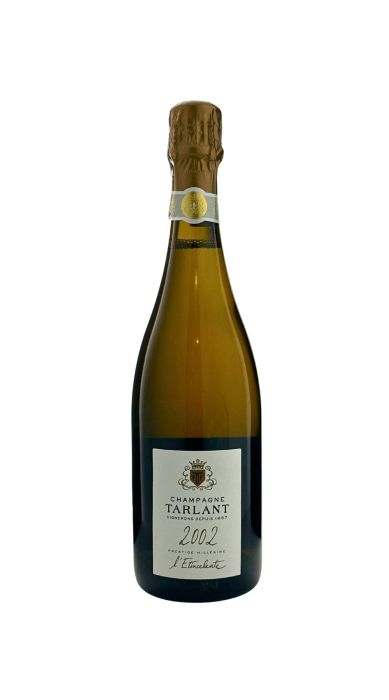
2002 Tarlant Champagne L'Etincelante Brut Nature

95+ RP

Availability:

Critic Reviews

An assemblage of 57% Chardonnay, 29% Pinot Noir and 14% Pinot Meunier, the 2002 MillĂ©sime Prestige l’Étincelante (literally: the sparkling one) opens with an exciting bouquet that displays lovely matured yet precise fruit aromas along with brioche, stony and flinty notes. On the palate, the 2002 is intense, firm and vibrantly fresh, showing a juicy, chalky texture and stimulating salinity in the long yet still young finish. This is one of the best vintage Champagnes I have tasted here so far. Tasted in April 2018.

Robert Parker Wine Advocate | 95+ RP
The 2002 Brut Nature L’Étincelante is one of the most restrained 2002 Champagnes readers will come across. And it is absolutely exquisite. Delicate scents of apricot, chamomile, pear, baked apple tart, brioche and yellow flowers all lift from the glass. Medium in body and super-refined, the 2002 has so much to recommend it. This is a tremendous showing from Benoit Tarlant.

Vinous Media | 95 VM
The 2002 Champagne l’Etincelante Brut Nature is 57% Pinot Noir, 29%, Chardonnay, and the rest Meunier, and was aged for 15 years on the lees prior to disgorgement in September 2018. It comes from two terroirs of Campanian chalk and Lutetian limestone. A medium yellow hue, its nose is floral with pure red fruits of marasca cherry, rose petal, croissant dough, and chalk. The mousse is refined and adds richness where it is otherwise is driving with mineral persistence. It is quite remarkable in that the texture is so well rounded when it could feel mean. It is still youthful at this stage and will continue to improve over the coming 20 or so years.

Jeb Dunnuck | 95 JD
I last tasted the 2002 Tarlant “l’Etincelante” a year ago and the wine has continued to blossom beautifully since then. This is the family’s vintage-dated cuvée crafted from a mosaic of different grapes and vineyards, with the goal to try to craft a cuvée that captures the essence of a given vintage. The 2002 ended up being composed from a cépages of fifty-seven percent chardonnay, twenty-nine percent pinot noir and fourteen percent pinot meunier. The vins clairs are barrel-fermented and do not go through malolactic fermentation; the wine was bottled up for secondary fermentation in the spring of 2003. It was disgorged fifteen years later in 2018. The wine’s aromatic constellation is superb, wafting from the glass in a complex mix of apple, white peach, a complex foundation of chalky soil, a nice touch of buttery oak, hazelnuts and plenty of upper register smokiness. On the palate the wine is focused, complex and full-bodied, with a superb core of fruit, lovely soil signature, elegant mousse and impressive length and grip on the impeccably balanced finish. This wine is drinking beautifully today, but clearly has the potential to cruise along in bottle for at least a couple more decades. (Drink between 2025 - 2050)

John Gilman | 95 JG
Complex nose of hazelnuts, salted caramel, sourdough brioche, salted lemons and dried fruit. Medium-bodied with tangy acidity with very fine bubbles. Delicious, salty character. Long and persistently sharp. 57% chardonnay, 29% pinot noir and 14% pinot meunier. Dosage 0g/L dosage. Disgorged in September 2020. Drink now.

James Suckling | 94 JS
Wine Details for 2002 Tarlant Champagne L'Etincelante Brut Nature

Type of Wine Champagne : Nothing like a refreshing, vivacious glass of fine Champagne during a hot summer afternoon. Typically combining Chardonnay, Pinot Noir, and Pinot Meunier, each Champagne house has a distinct style. Whether you want to sample a single varietal (such as the 100% Chardonnay blanc de blancs) or a tasteful blend, no region can compete with Champagne.
Varietal Proprietary Blend : Proprietary Blend is a general term used to indicate that a wine is comprised of multiple grape varietals which are either “proprietary” to the winery or is blended and does not meet the required maximum or minimum percentage of a particular varietal. This also is the case for the grape’s place of origin, especially for region, appellation or vineyard designated wines. There are endless examples of blended wines which are labeled as “Proprietary Blend” and in conjunction with each region’s stipulated wine laws and regulations makes for a vast blanket for wines to fall into. Perhaps the simplest example is California; if a wine is to be labeled as Napa Valley Cabernet Sauvignon, it is required to have at least 75% of the varietal (Cabernet Sauvignon) and 85% of the fruit must be cultivated from the Napa Valley wine district. If the wine does not meet the requirements, it is then labeled as Proprietary Blend.

Country France : Wine is the lifeblood that courses through the country of France, pulsing with vigorous pride and determination. Viticulture is not just a hobby or an occupation in France; it is a passion, a cherished tradition that has been passed down through generations of wine stained hands. Winemaking is a beloved art that has been ingrained in the culture, an aptitude instilled in sons by fathers and the hallmark for which France’s reputation was built, allowing it to be renowned as, arguably, the most important wine producing country in the world.


For centuries, France has been producing wines of superior quality and in much greater quantity than any other country in the world. It boasts some of the most impressive wine regions, coveted vineyards and prestigious wines on earth. The regions of Bordeaux, Burgundy, Rhone, Sauternes and Champagne have become the benchmark, for which others aspire to become. Legendary producers such as Chateaux Margaux, Domaine De La Romanee Conti, Chapoutier, d’Yquem and Dom Perignon are idolized world-wide.


France has stamped its name on nearly every style of wine, from the nectar-like sweet Sauternes to hedonistic Chateauneuf Du Papes classic Bordeaux and Burgundy, to its sparkling dominance in Champagne. Many of the most infamous grape varietals in the world, such as Cabernet Sauvignon, Merlot, Pinot Noir and Chardonnay originated in France and are not only beloved, but utilized in the creation of some of the greatest wines on earth. French wine production commands the attention of the wine market year after year. With over 860,000 hectares under vine, and numbers close to 50 million hectoliters of wine produced annually, France dominates the market and sets the standard for not only product quality, but also quantity.


France’s many contributions to the world of wine have been absolutely indispensable. The country is the originator of the term “Premier Cru,” coined the term Terroir (a French term so complex there is no literal translation) and has laid the blueprint for a structured appellation system, which others have implemented in their own countries. French vineyard techniques and winemaking practices are mimicked world-wide. California vintners have been replicating Rhone style wines for decades, South America has adopted the French varietal of Malbec and countries around the world are imitating Burgundian styled Chardonnay and Pinot Noir.


With vast diversity in terroir, France is home to some of the most hospitable winegrowing locations on earth. The combination of topography, geology, climate, rainfall and even the amount of sunlight combined with the long historical tradition of winegrowing and making, has allowed the vintners of France to not only hone their skills, but learn from nature to create a product that like the world in which it resides… is very much alive.


Region Champagne : The sharp, biting acidity, cutting through the richness; the explosive force that shatters the bubbles as they rise to the surface; the intense flavor and compelling, lively mouthfeel; these are all hallmarks of a good Champagne. Most wines are made from a combination of Chardonnay, Pinot Noir, and Pinot Meunier, but there are pure-Chardonnay variants and ones that blend only Pinot Noir and Pinot Meunier. As a result, most wines come with a feeling of familiarity, if not nostalgia. Each Champagne house has its own unique style, so different bottles of Champagne may not resemble each other outside of the core varietal strengths. The soil composition of the subregion is characterized by belemnite and chalk, which lets it absorb heat during the daytime and release it at night. This terroir helps create the feeling of airy, playful lightness of fine sparkling wine.

These wines were originally marketed towards royalty, and you can feel a hint of that elusive blue-blood elegance and confidence while drinking one. A good Champagne carries you away like a hurricane carries small debris, and you can feel the powerful life force in each bubble even. The characteristic Champagne "pop" has become a staple at parties and celebrations around the globe - when you hear it, good times are right around the corner.

Overview

Producer Tarlant

People also bought:

Need Help Finding the right wine?

Your personal wine consultant will assist you with buying, managing your collection, investing in wine, entertaining and more.

loader
Loading...