Important Notice

By continuing, you agree to our privacy policy, consent to cookies, and confirm you are 21 or older.

I have read and agree to the Privacy Policy and Terms of Service.

YOU MUST BE 21 OR OLDER TO CONTINUE

NYC, Long Island and The Hamptons Receive Free Delivery on Orders $300+

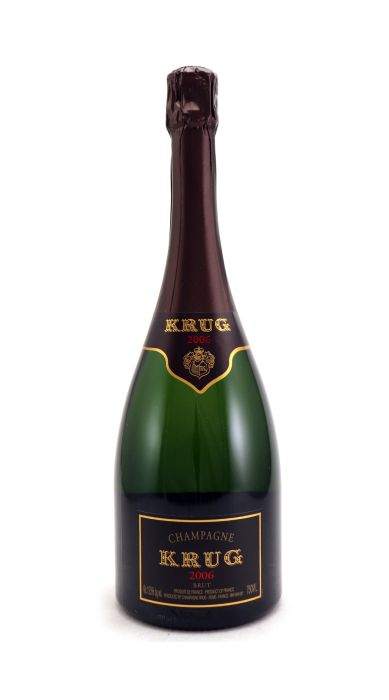
2006 Krug

97 RP

Featured Review
As I reported when it was released, Krug's 2006 Brut is clearly one of the vintage's highlights. Offering up aromas of dried fruits, pear, freshly baked bread, caramelized apples, honeycomb and toasted sourdough, it's full-bodied, deep and layered, with superb concentration, racy acids and an impressively tightly wound profile for this demonstrative vintage. I observed last year that this is surprisingly reserved for the vintage, and if anything, that quality is even more in evidence today. While many 2006 Champagnes are likely to be at their best in their demonstrative youth, this is one wine unquestionably built for the long haul. Robert Parker Wine Advocate

Robert Parker | 97 RP

Critic Reviews

As I reported when it was released, Krug’s 2006 Brut is clearly one of the vintage’s highlights. Offering up aromas of dried fruits, pear, freshly baked bread, caramelized apples, honeycomb and toasted sourdough, it’s full-bodied, deep and layered, with superb concentration, racy acids and an impressively tightly wound profile for this demonstrative vintage. I observed last year that this is surprisingly reserved for the vintage, and if anything, that quality is even more in evidence today. While many 2006 Champagnes are likely to be at their best in their demonstrative youth, this is one wine unquestionably built for the long haul.

Robert Parker Wine Advocate | 97 RP
The 2006 Krug Vintage is fabulous. Here the richness, breadth and texture of Pinot come through loud and clear in a Champagne that is classic Krug. Red plum, coffee, spice, baked apple tart and lemon confit all flesh out effortlessly in the glass. The ripeness of the year is evident, and yet the vibrancy of the Chardonnay lends so much energy. The 2006 can be enjoyed today, but also has the balance and stuffing to develop well for many years to come. This is a superb showing from the 2006. This is Krug ID: 118014.

Vinous Media | 97 VM
A stunner, with mouthwatering vibrancy and focus married to all of the opulence of a great 2006 Champagne. Richly fragrant, offering nutmeg, cardamom, jasmine, lemongrass, espresso and grilled nut notes enmeshed in a core of black currant and tangerine fruit flavors. Beautifully creamy and complex, this glides across the palate on the long, lasting finish. Disgorged Winter 2017-2018. Drink now through 2030.

Wine Spectator | 97 WS
This is a very deep and layered vintage Champagne with a round, ample mouth feel. It’s full-bodied with lots of cooked apple and mirabelle, as well as biscuit undertones. Hints of stone and flint. It’s flavorful. Delicious now and will age beautifully. Drink or hold.

James Suckling | 96 JS
Salty brine on the nose. Very restrained on the palate showing lots of finesse and soft mousse. Excellent acidity provides a freshness to allow further ageing in bottle. Long, savoury, umami style aftertaste. (Drink between 2021-2028)

Decanter | 95 DEC
The 2006 Krug Brut Millésime is a superb young wine. The warmer growing season of 2006 has given this vintage of Krug a bit more early generosity than either the 2004 or 2008 vintages at a similar stage, but still with fine potential for very long evolution in the cellar. The cépages ended up being forty-eight percent pinot noir, thirty-five percent chardonnay and seventeen percent pinot meunier. The bouquet wafts from the glass in a complex and expressive bouquet of white peach, fresh apricot, patissière, hazelnut, fresh-baked wheat bread, a beautiful base of soil tones and a topnote of dried flowers. On the palate the wine is bright, full-bodied and zesty, with a great core of fruit, superb mineral drive and grip, ultra-refined mousse, impeccable balance and a long, complex and focused finish. Stylistically, this reminds me quite a bit of the 1989 Krug when it was first released. Fine, fine juice. (Drink between 2021-2075)

John Gilman | 95 JG
The heat of the 2006 season ripened this wine to a fleshy roundness, even as Eric Lebel’s blending skills brought the wine to a brisk balance and a stark beauty. The wine is 48 percent pinot noir, mostly from the Montagne de Reims, with 35 percent chardonnay and 17 percent pinot meunier (from Leuvrigny and Sainte-Gemme). Its youthful brightness has sustained fresh apple flavors, red-apple-skin tannins and lemon-blossom scents through 12 years of aging, the only sign of that age borne out in notes of brioche. It’s a substantial wine, with a long life ahead.

Wine & Spirits | 94 W&S
Wine Details for 2006 Krug

Type of Wine Champagne : Nothing like a refreshing, vivacious glass of fine Champagne during a hot summer afternoon. Typically combining Chardonnay, Pinot Noir, and Pinot Meunier, each Champagne house has a distinct style. Whether you want to sample a single varietal (such as the 100% Chardonnay blanc de blancs) or a tasteful blend, no region can compete with Champagne.
Varietal Proprietary Blend : Proprietary Blend is a general term used to indicate that a wine is comprised of multiple grape varietals which are either “proprietary” to the winery or is blended and does not meet the required maximum or minimum percentage of a particular varietal. This also is the case for the grape’s place of origin, especially for region, appellation or vineyard designated wines. There are endless examples of blended wines which are labeled as “Proprietary Blend” and in conjunction with each region’s stipulated wine laws and regulations makes for a vast blanket for wines to fall into. Perhaps the simplest example is California; if a wine is to be labeled as Napa Valley Cabernet Sauvignon, it is required to have at least 75% of the varietal (Cabernet Sauvignon) and 85% of the fruit must be cultivated from the Napa Valley wine district. If the wine does not meet the requirements, it is then labeled as Proprietary Blend.

Country France : Wine is the lifeblood that courses through the country of France, pulsing with vigorous pride and determination. Viticulture is not just a hobby or an occupation in France; it is a passion, a cherished tradition that has been passed down through generations of wine stained hands. Winemaking is a beloved art that has been ingrained in the culture, an aptitude instilled in sons by fathers and the hallmark for which France’s reputation was built, allowing it to be renowned as, arguably, the most important wine producing country in the world.


For centuries, France has been producing wines of superior quality and in much greater quantity than any other country in the world. It boasts some of the most impressive wine regions, coveted vineyards and prestigious wines on earth. The regions of Bordeaux, Burgundy, Rhone, Sauternes and Champagne have become the benchmark, for which others aspire to become. Legendary producers such as Chateaux Margaux, Domaine De La Romanee Conti, Chapoutier, d’Yquem and Dom Perignon are idolized world-wide.


France has stamped its name on nearly every style of wine, from the nectar-like sweet Sauternes to hedonistic Chateauneuf Du Papes classic Bordeaux and Burgundy, to its sparkling dominance in Champagne. Many of the most infamous grape varietals in the world, such as Cabernet Sauvignon, Merlot, Pinot Noir and Chardonnay originated in France and are not only beloved, but utilized in the creation of some of the greatest wines on earth. French wine production commands the attention of the wine market year after year. With over 860,000 hectares under vine, and numbers close to 50 million hectoliters of wine produced annually, France dominates the market and sets the standard for not only product quality, but also quantity.


France’s many contributions to the world of wine have been absolutely indispensable. The country is the originator of the term “Premier Cru,” coined the term Terroir (a French term so complex there is no literal translation) and has laid the blueprint for a structured appellation system, which others have implemented in their own countries. French vineyard techniques and winemaking practices are mimicked world-wide. California vintners have been replicating Rhone style wines for decades, South America has adopted the French varietal of Malbec and countries around the world are imitating Burgundian styled Chardonnay and Pinot Noir.


With vast diversity in terroir, France is home to some of the most hospitable winegrowing locations on earth. The combination of topography, geology, climate, rainfall and even the amount of sunlight combined with the long historical tradition of winegrowing and making, has allowed the vintners of France to not only hone their skills, but learn from nature to create a product that like the world in which it resides… is very much alive.


Region Champagne : The sharp, biting acidity, cutting through the richness; the explosive force that shatters the bubbles as they rise to the surface; the intense flavor and compelling, lively mouthfeel; these are all hallmarks of a good Champagne. Most wines are made from a combination of Chardonnay, Pinot Noir, and Pinot Meunier, but there are pure-Chardonnay variants and ones that blend only Pinot Noir and Pinot Meunier. As a result, most wines come with a feeling of familiarity, if not nostalgia. Each Champagne house has its own unique style, so different bottles of Champagne may not resemble each other outside of the core varietal strengths. The soil composition of the subregion is characterized by belemnite and chalk, which lets it absorb heat during the daytime and release it at night. This terroir helps create the feeling of airy, playful lightness of fine sparkling wine.

These wines were originally marketed towards royalty, and you can feel a hint of that elusive blue-blood elegance and confidence while drinking one. A good Champagne carries you away like a hurricane carries small debris, and you can feel the powerful life force in each bubble even. The characteristic Champagne "pop" has become a staple at parties and celebrations around the globe - when you hear it, good times are right around the corner.

Overview

Producer Krug : “One cannot obtain a good wine without using good elements and good terroir” – Joseph Krug, founder of Krug Champagne. He was insistent on this vital combination stating that it was possible to obtain seemingly good cuvees through the use of unremarkable elements and wines but should not be relied upon. In other words, it was a risk that could potentially allow the process to fail and their reputation ruined. Krug’s passion for winemaking was remarkable, taking the traditional Champagne blending beyond the bounds of what was customary and creating an unmatched quality bottling. This was the inception of the very first luxury Champagne.

Krug has a rich and successful history in Reims dating back to 1843. The house enjoyed early success due to Joseph Krug’s passion and determination to produce the highest quality wines, rivaling the already existing powerhouses at the time. Though Krug was sold in 1999 to LVMH, it is still comfortably in the hands of the seventh generation family member, Olivier Krug, who is insistent on maintaining the house’s reputation and consistent style.

Each year the dream of Joseph Krug is recreated through their many cuvees including the Grand Cuvee, Rose, Clos Du Mesnil, Clos D’Ambonnay, and the Collection series, however the Grand Cru is the staple to this continued vision of excellence, in memory of its founder. Each cru is vinified separately with no malolactic fermentation with two rackings done solely by gravity. The wines are then placed in stainless steel tanks.

All three Champagne varieties of Chardonnay, Pinot Noir and Pinot Meunier are utilized, though their mainstay of Grand Cuvee and their flagship Clos Du Mesnil consists entirely of Chardonnay. Production is incredible considering the minute plots of each; with the Grand Cuvee having an annual production rate of 384,000 bottles, while the Clos Du Mesnil comes in at 504,000 bottles respectively.

Krug wines offer exceptional beauty and poise which tell the story of the plot’s grapes and rich history. One lucky enough to obtain a bottle or two may have the distinct challenge of whether to uncork the bottle or to cellar. Either way they are partaking in a piece of history dating back to 1843 of exceptional vision, unrivaled quality and success.

People also bought:

Need Help Finding the right wine?

Your personal wine consultant will assist you with buying, managing your collection, investing in wine, entertaining and more.

loader
Loading...