Important Notice

By continuing, you agree to our privacy policy, consent to cookies, and confirm you are 21 or older.

I have read and agree to the Privacy Policy and Terms of Service.

YOU MUST BE 21 OR OLDER TO CONTINUE

NYC, Long Island and The Hamptons Receive Free Delivery on Orders $300+

Hermitage

Hermitage

Hermitage

Hermitage Wine

When the word “Syrah” appears in wine conversations, another name quickly follows – the Hermitage AOC is considered the origin point of this marvelous grape varietal. The hard-working winemakers of this appellation have been making their presence felt on the global stage for ages, and Syrah has played a huge part in their initiative. If you decide to visit this legendary hill, the feeling of wilderness hovers in the wind, invigorating you and opening your appetite for some delicious wine. Once you try Hermitage’s finest, however, that appetite threatens to stay open for an eternity, as these wines will carve a living space in your memory after so much as one sip.

The bouquet of scents and flavors these bottles present is nothing short of astounding, with a texture that cannot be fully deciphered by anyone who isn’t a seasoned wine-tasting veteran. Expect to be blown away by an orchestral composition of primal blackberries and black raspberries, earthy minerals, playful spice and a thick bassline of smoke. If you enjoy pondering about the nature of wine and its many complexities, spending untold hours fantasizing about the nuances and subtleties that your favorite bottles develop over the years, then you’ll have a field day with Hermitage wines. Their immense aging potential makes them ideal candidates for hoarding in your cellar, and they’re also perfect for private evenings where you drink by yourself, fully giving yourself over to the whirling tides of glorious grape — true love at its finest. Bon appetit!
Sort:
View as List Grid
per page
1990 chave hermitage Hermitage

Also mature, yet with another level of texture and richness, the 1990 Hermitage is a profound effort that’s drinking perfectly. Voluptuous, yet classy and still refined, with awesome cassis and blackberry fruit, flowers, rose petal and hints of rendered bacon fat, it is full-bodied, textured and layered on the palate, with no hard edges and killer length on the finish. This beauty makes lights go off in my head, and as with the ’91, I’d drink bottles over the coming 4-5 years or so.Located in the tiny village of Mauves, just south of Hermitage, lies one of the true bastilles of traditionally made wines, and there are few vinous experiences that surpass getting to taste through the different terroirs of Hermitage and Saint Joseph in Chave’s cellar. Founded in 1481, Chave has seen a long succession of generations, with Gerard Chave, who was born in 1935, slowly beginning to hand over the reins to his brilliant son, Jean-Louis (born in 1968), in the late 1980s and early 1990s. Today, the estate stays firmly planted in tradition, yet is far from resting on its laurels or reputation, completing work on a new cellar (just across the street from their existing cellar and connected via a tunnel) in 2014, and working hard on a number of new vineyard sites. While this new cellar includes a state-of-the-art lab, Jean-Louis was quick to point out, “you don’t need a lab to make great wine.” In addition, and along with the help of Jean-Louis’ wife, Erin Cannon-Chave, they’ve continued to grow their negociant label, Chave Selection, which offers fabulous bang-for-the-buck and includes both Northern and Southern Rhones. While Jean-Louis has a professor-like level of expertise with regards to Hermitage, today his passion is firmly directed at the steep slopes on the western side of the Rhone River, in the appellation of Saint Joseph. He has numerous new vineyards coming on-line, and while everything is currently blended into his estate Saint-Joseph, each of the individual terroirs are incredibly unique, and I’m sure will be bottled on their own sometime in the future. With more and more of Hermitage going to larger corporations these days, it’s inspiring to see this small, family owned estate still sitting near the top of the hierarchy. Jean-Louis is still young (and has a young son who takes after him, and a daredevil daughter who takes after Erin), so the future is very bright at this estate! Looking specifically at their Hermitage, the Chaves vinify each of their individual terroirs separately, and the components are all aged in small barrels before blending and bottling without being filtered. As is the norm in Hermitage, everything is completely destemmed, and the percentage of new oak is kept to a minimum, falling in the 20-30% range. The style here is beautifully transparent, with the wines always showing the vintage characteristics clearly (which Jean-Louis breaks into a “Granite” year, or a “Sun” year). In addition, when tasted as individual components, each plot’s characteristics always shine through. While the wines have the balance and purity to dish out plenty of pleasure in their youth, they age beautifully, with Jean-Louis recommending at least 15 years of cellaring for most vintages.Robert Parker | 99 RPThe 1990 Hermitage is fully mature yet holding beautifully. Perfumed notes of sweet cassis and blackberry fruits, rose hips, smoked meats, and exotic spices all flow to a full-bodied, layered, seamless, flawlessly balanced Hermitage that glides over the palate with no sensation of weight or heaviness. With resolved tannins, beautiful purity, and a great finish, it’s unquestionably ready to go, yet should hold nicely for another 8-10 years.Jeb Dunnuck | 99 JDThis still very rich and alluring, with a core of dark roasted plum, black currant and blackberry fruit that still has an unctuous feel. There are additional floral and black tea notes, flashes of bergamot and clove, and a lingering tarry edge that supports the finish. Still throws a long shadow. Going in, I would have picked this as the wine to beat from the older vintages, but the ’91 prevails in overall grace.—Non-blind Chave vertical (June 2012). Drink now through 2020. 2,500 cases made.Wine Spectator | 98 WSChave’s 1990 Hermitage is simply magnificent from the moment it is poured. A dark, translucent ruby, the 1990 hits the palate with a rush of bold red-fleshed fruits. Hints of herb, smoke, cedar, dried flowers, tobacco and leather open up with time in the glass, but above all else, the 1990 is superbly polished and silky, with exceptional balance and an alluring, sensual personality that makes it nearly impossible to put the glass down. This is an especially fine bottle of the 1990 and a real thrill to drink. It simply does not get too much better than this. Readers lucky enough to own well-stored bottles can look forward to another 15-20 years of pure pleasure.Antonio Galloni | 97 AG(Hermitage- Domaine Jean-Louis Chave) The 1990 Chave, in notable contrast to the ’90 La Chapelle, is a brilliant bottle of wine. There was a time four or five years ago when this vintage of Chave seemed to have a little bit of pruniness developing, but with further bottle age the wine has snapped back into focus and offers a stunningly pure and transcendental aromatic profile. The majestic bouquet soars from the glass in a mélange of black raspberries, cassis, black olives, hot stones, tobacco smoke, earth and a touch of La Mission-like chipotle pepper. On the palate the wine is full-bodied, pure and minerally, with fine focus, great depth in the mid-palate, ripe tannins, solid acidity, and great length and grip on the profound finish. This is only a few years away from its absolute apogee, but it should drink at its peak for at least another three decades. A great Chave (Drink between 2010-2040).John Gilman | 96+ JG

99
RP
As low as $1,295.00
2006 chapoutier hermitage le meal blanc Hermitage

Just as good as the de l’Orée, but in a very different style, the medium gold-hued 2006 Ermitage Le Méal Blanc has a complex, layered perfume of honeysuckle, orange blossom, celery seed, caramelized stone fruits, and acacia flowers. Just about pure perfection on the palate, it’s full-bodied, deep, and incredibly concentrated, with a stacked mid-palate, an unctuous, opulent texture, and a gorgeous finish. This is another magical Hermitage Blanc from the genius of Michel Chapoutier. Don’t miss it.Jeb Dunnuck | 99 JDFrom a warmer micro-climate, the 2006 Ermitage Le Meal blanc boasts extraordinarily intense fruit, glycerin, and tactile impression. Stones, cherries, red currants, quince, and honeyed citrus are all present in this colossal wine that is unctuously textured, very full-bodied, and super-ripe and long. It reveals less noticeable acidity than l’Oree or l’Ermite, and, like Les Granits, it is a wine that can be drunk early, but it should last for 25-30 years.While Michel Chapoutier produces some of the world’s greatest wines from single parcels of old vines spread throughout the northern and southern Rhone (see my ecstatic reviews of his 2007 and 2006 Chateauneuf du Papes in issue #179), he also has an impressive portfolio of value-priced wines that are often over-looked when this impressive producer is discussed. Following are some top-notch picks that all sell for exceptionally fair prices. Chapoutier has not achieved as great as success in Cornas as he has in the other northern Rhone appellations, although his Cornas wines get better with each vintage. There are four extraordinary single vineyard white wines, all of which are among the greatest dry white wines of the world. While all of them can be drunk young, they are meant for extended cellaring. Made from very small yields, they represent the essence of a varietal as well as a vineyard site. As the following notes demonstrate, 2006 was one of the greatest vintages for white wines at Chapoutier. The single vineyard selection parcellaire red wines range in production from 500 to nearly 1,000 cases. 2007 is a very good vintage for these selections, but 2006 has an edge. It is reminiscent of 1996 because of the wines’ freshness and acid levels, but Chapoutier’s 2006s are even more concentrated than his 1996s. Chapoutier’s four 2006 cuvees of single vineyard Hermitage are exquisite. Most of the yields were between 10 and 20 hectoliters per hectare, and the wines are extravagantly rich. The 2006 and 2007 luxury cuvees of Chateauneuf du Pape Croix des Bois and Chateauneuf du Pape Barbe Rac were reviewed in issue #179. They are all astounding wines, especially in 2007.Robert Parker | 99 RPPowerful—and slightly bass heavy for now—with apricot, peach and persimmon notes leading the way, followed by alluring piecrust, salted butter, yellow apple and mineral notes that stretch out the finish. Needs a little time to come together fully, but then should cruise in the cellar. Best from 2010 through 2025. 682 cases made, 100 cases imported.Wine Spectator | 97 WSMedium gold. Deep, pungent aromas of honey, apricot pit and brown sugar, with a subtle lemon rind quality adding vivacity. Rich and fleshy, with nervy acidity lifting the ripe pit fruit and poached pear flavors. Finishes with a jolt of anise. This is very complex.Vinous Media | 93 VM

99
RP
As low as $229.00
2009 Chapoutier Hermitage L'Ermite, Rhone Red

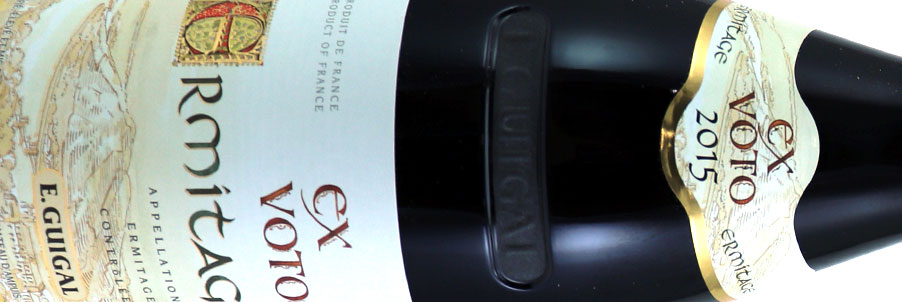
Conservatively, the 2009 Ermitage l’Ermite (702 cases) needs 25-30 years of cellaring. Another monumental effort from Michel Chapoutier, it possesses copious notes of smoky asphalt, black truffles, pen ink, graphite and blackberry liqueur intermixed with hints of flowers and crushed rocks. Extremely full-bodied with abundant sweet tannins, amazing penetration on the palate and a long finish, this historic effort should age effortlessly for 50-100+ years.As I have written many times, all of these wines are produced from rigidly cultivated, bio-dynamically managed vineyards. That has been the rule since Michel Chapoutier first took over this firm in the late 1980s. Now, with over 20 years of biodynamic viticulture under his belt, Chapoutier remains committed to this rather radical style of organic farming. He believes the effect is to reduce rot in damp, rainy vintages. Moreover, he has observed that after 10 to 15 years of biodynamic farming, the natural acids tend to be more vivid and the overall pH of the soils (as well as the wines) has dropped. Controversial, outspoken and brutally candid, Chapoutier, who suffers no fools, continues to admirably produce wines that are among the finest in the world and potentially the longest lived. Refusing to acidify, chaptalize, or touch the wines in any way, he clearly wants every wine to capture the very essence of its terroir and vintage personality. In this, he succeeds remarkably. No one has made more effort in resurrecting the once-forgotten backwater appellation of St.-Peray than Michel Chapoutier. Working in conjunction with the famed Michelin three-star restaurant family, the Pics, Chapoutier has produced a sensational 2010 Gamme Pic and Chapoutier St.-Peray, and the first single-vineyard St.-Peray, the 2010 Lieu-Dit Peyrolles St.-Peray, which is one of the greatest St.-Perays I have ever tasted. This appellation is all steep hillside vineyards planted in pure, decomposed granite soils, not dissimilar from Hermitage, but they are located on the other side of the Rhone, facing the city of Valence. The single-vineyard wines, or selections parcellaires, 2010 whites are absolutely amazing, with production levels ranging from 300 to 700 or 800 cases of each cuvee. These wines are for true connoisseurs, as they are expensive and meant for long, long evolutions, but they capture the essence of a vintage and terroir as well as any wines in the world. As for the selections parcellaires of 2010 reds, Chapoutier likes this vintage almost as much as 2009, but feels it is very different, emphasizing more acidity and minerality, whereas 2009 is a combination of pure power, concentration and great potential longevity. Michel Chapoutier considers the 2009s, which are all in bottle, to be among the greatest wines he has ever produced, equaling his finest wines of 2006, 2003, 1999, 1990 and 1989 (his debut year).Robert Parker | 98+ RPThis has a taut feel still, with an almost searing iron edge, but there’s plenty of flesh in reserve, with plum compote, cherry pâte de fruit and anise notes that slowly fill in on the lengthy finish. Offers lots of grip too as this slowly unwinds with air, letting its iron edge stretch out even more. There’s terrific spine and cut, with very impressive length. Best from 2016 through 2036. 702 cases made, 40 cases imported.Wine Spectator | 98 WSSeemingly the most structured and traditional of the Ermitages, the 2009 M. Chapoutier Ermitage l’Ermite comes from 80+ year-old vines and is 100% destemmed Syrah that’s aged in a combination of new and 1-year-old barrels. It possesses an absolutely brilliant array of black raspberries, smoke, graphite, mineral, and assorted floral characteristics on the nose, and this is followed up by a full-bodied, structured, dense, and layered Syrah that has masses of ripe tannin, gorgeous precision and focus, and a blockbuster finish. As with the Le Pavillon, this needs a decade or more in the cellar, and will have an incredibly long life ahead of it.Jeb Dunnuck | 97 JDBright purple. Explosive aromas of candied red fruits, potpourri and incense, with a medicinal nuance adding complexity. Stains the palate with intense raspberry and bitter cherry flavors lifted by smoky mineraity. Becomes spicier and deeper with air and finishes with superb clarity and lingering florality. By all means allow this to rest for at least another five years.Vinous Media | 94+ VM
98+
RP
As low as $895.00
2011 Chapoutier Hermitage L'Ermite, Rhone Red

The 2011 Ermitage l’Ermite is a killer Hermitage that offers a huge bouquet of thick crème de cassis and black raspberry fruits as well as the classic minerality, graphite, and licorice notes this cuvée always shows. Full-bodied, dense, and concentrated on the palate, it’s a glorious effort that’s still moderately backward and tannic yet is just now starting to round the corner. It’s going to be very long lived, especially for a 2011.Jeb Dunnuck | 98 JDThe opaque black/purple-tinged 2011 Ermitage l’Ermite offers a combination of crushed stones, creme de cassis, blackberry liqueur, barbecue smoke and roasted meats. It is a powerful, slightly austere, backward effort that will need 5-6 years of bottle age after its release next year. It may turn out to be a 30-50-year wine in a vintage that made relatively forward wines. In that sense, it is an outlier in this vintage.Robert Parker | 95-98 RPOpaque ruby. An explosively perfumed bouquet features blackberry, cassis, cola, potpourri and smoky Indian spices. Broad, concentrated and alluringly sweet, with pliant dark fruit and violet pastille flavors showing wonderful depth as well as purity and vivacity. Bright mineral and spice notes accent the long, penetrating finish, which is firmed by silky, harmonious tannins.Vinous Media | 94 VM

98+
RP
As low as $1,045.00
2018 paul aine jaboulet hermitage la chapelle Hermitage

The beautifully proportioned 2018 Hermitage La Chapelle comes across as a complex, complete version of this renowned bottling, with no rough edges—just moderate spice, cassis, red berries and cedar on the nose. It’s medium to full-bodied, silky and fine, brimming with harmony and elegance on the palate, while the finish is long, echoing with cassis, charcoal and crushed stone. The tannins firm up a bit on the finish, so I suspect this will close down soon, then blossom sometime after 2025.Robert Parker Wine Advocate | 98+ RPAs I wrote last year from barrel, the 2018 Hermitage La Chapelle is a backward, primordial Hermitage built for the ages. Incredible crème de cassis, blueberries, scorched earth, burning embers, and liquid violet-like aromas and flavors dominate the bouquet, and this beauty is full-bodied, concentrated, and powerful on the palate. With just hints of the smoky, meaty, beefy character that emerges from all aged examples of this cuvée, it has incredible tannins, perfect balance, and a monster of a finish. Don’t think about touching bottles for at least 7-8 years, and it’s going to keep for 50 years or more.Jeb Dunnuck | 98+ JDOpaque ruby. Displays powerful, highly perfumed aromas of black/blue fruit preserves, licorice, cola, baking spices and potpourri, along with an exotic suggestion of incense. Utterly stains the palate with intense blackberry, cherry, cassis, floral pastille and spicecake flavors that deliver a suave blend of weight and energy. Youthfully solid tannins add shape and grip to an extremely long, mineral- and floral-accented finish that shows outstanding clarity and dark fruit thrust.Vinous Media | 96 VMSeems a little shy at the moment, but you can tell that this has serious poise and pedigree with subtle clove, crushed-brick, iron, black-cherry and plum-skin character. It’s full-bodied, yet very tight and reserved with super refined tannins that are so fine-textured, yet intense. Give this three or four years to show its true self. From organically grown grapes. Better after 2023.James Suckling | 96 JSJust 15% new oak, but it is nonetheless quite noticeable (though should harmonise in time) with good rich, berry fruit underneath. Full-bodied, very in fact - real weight here. Alcohol feels somewhat out of balance, and the tannic weight is massive. Feels a touch over-extracted and heavy on the palate, it lacks the lightness of touch of the 2016. There is a good sense of textural finesse however, ending with firm, chewy, slightly drying tannins that will need a good decade to soften. Drinking Window 2030 - 2042.Decanter | 92 DEC

98+
JD
As low as $185.00

Need Help Finding the right wine?

Your personal wine consultant will assist you with buying, managing your collection, investing in wine, entertaining and more.

loader
Loading...